
5 Key Factors to Assess the Lifespan of Your Commercial Roofing Materials
As a business owner, knowing how to determine the lifespan of your current commercial roofing materials is crucial for budget planning and maintaining the structural integrity of your property. In Southern California, where weather conditions can range from intense sun to heavy rains, selecting the right roofing material and understanding its longevity can save you significant costs in repairs and replacements. This guide will walk you through the critical factors affecting the lifespan of various commercial roofing materials.

Key Takeaways
- Material type, installation quality, and maintenance are primary factors influencing the lifespan of commercial roofs.
- Understanding the specific climate challenges in Southern California is essential for determining which roofing material will last the longest.
- Regular inspections and prompt repairs can significantly extend the life of your commercial roofing.
- Comparing costs and benefits of different materials helps in making informed decisions for your business.
- Consult with professionals for a detailed assessment of your current roofing system.
Understanding Roofing Material Longevity
Types of Commercial Roofing Materials
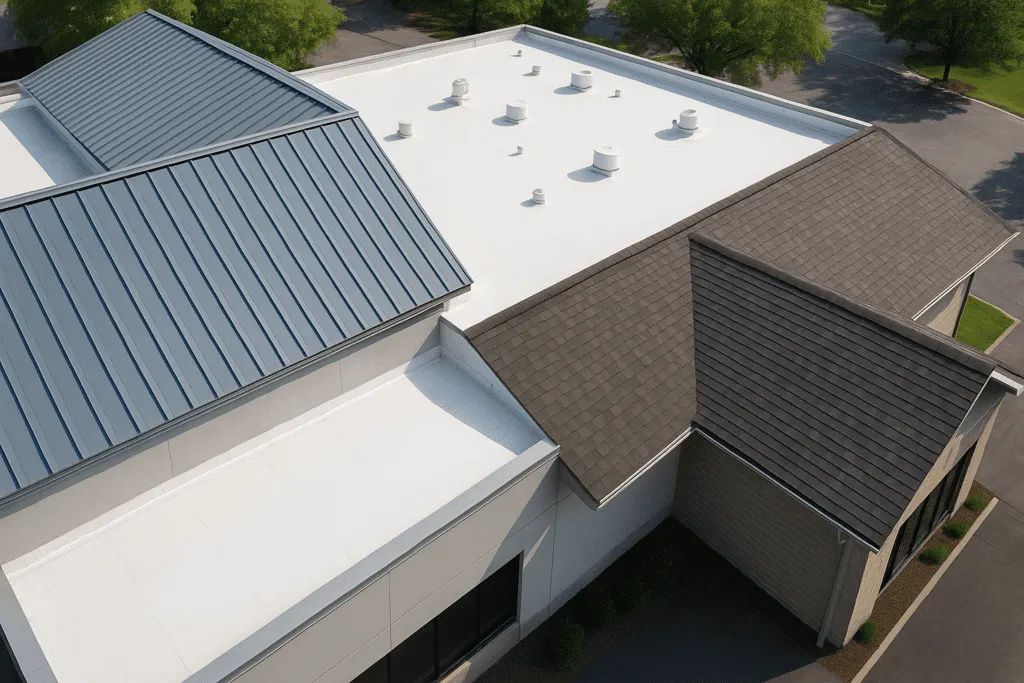
Determining how long your commercial roofing materials will last begins with understanding the type you have installed. Common materials include TPO, EPDM, metal, and asphalt shingles, each offering different durability levels. For instance, metal roofing is known for its exceptional lifespan, often exceeding 40 years with proper maintenance, making it a popular choice for businesses seeking longevity.
In contrast, TPO and EPDM roofs typically last between 15 to 25 years. These materials are cost-effective and provide excellent UV resistance, crucial for the sunny Southern California climate. Meanwhile, asphalt shingles, though more common in residential applications, can still serve commercial properties efficiently for 20-30 years if properly maintained.
Installation Quality
The quality of installation plays a pivotal role in determining the lifespan of your commercial roofing materials. Poor installation can lead to premature failures, leaks, and costly repairs. Ensuring that your roofing is installed by certified professionals is critical. High-quality installation will also consider the unique needs of your building’s architecture and local climate conditions.
For example, improper sealing of seams in TPO or EPDM roofs can lead to water infiltration and severe damage over time. Investing in skilled labor for the initial installation can save you considerable expenses in frequent roof leak repairs and replacements.
Maintenance Practices
Regular maintenance is essential to maximize the longevity of your roofing materials. Scheduled inspections, at least twice a year, help identify potential issues before they escalate. An effective maintenance plan includes clearing debris, checking for signs of wear, and ensuring proper drainage to prevent water accumulation.
Proactive maintenance not only extends the life of your roof but also ensures that your building complies with commercial roofing inspection requirements. This is especially crucial in areas prone to natural events like earthquakes or heavy rainfall, common in Southern California.
Environmental and Climatic Impact
Weather Challenges in Southern California
The weather conditions in Southern California significantly affect the lifespan of your commercial roofing materials. Intense UV radiation can deteriorate roofing membranes, leading to cracks and leaks. Materials such as TPO are designed to reflect UV rays, reducing heat absorption and extending the roof’s life.
Moreover, the occasional heavy rains necessitate a robust drainage system to prevent water pooling, which can lead to structural damage. An understanding of these weather patterns is essential when choosing a roofing material that won’t succumb quickly to the local climate’s challenges.
| Climate Factor | Impact on Roofing Material | Recommended Action |
|---|---|---|
| UV Radiation | Accelerates material degradation | Use reflective coatings |
| Rainfall | Causes leaks and water damage | Ensure proper drainage |
| Temperature Fluctuations | Leads to expansion and contraction | Install flexible materials |
Material Suitability for Local Climate
Choosing a material that is well-suited for the local climate is crucial. For instance, flat roofing options like TPO are excellent for areas with high solar exposure due to their reflective properties. Metal roofs, while initially more expensive, offer durability and energy efficiency, which can be beneficial in reducing cooling costs during hot summer months.
It’s important to weigh the upfront cost against the potential savings in energy and maintenance. For example, while TPO may need more frequent inspections, its UV resistance can significantly lower cooling costs, providing overall savings for businesses in sunny climates.
Impact of Natural Disasters
Natural disasters like earthquakes and wildfires, which are more prevalent in California, also play a role in determining the lifespan of your commercial roofing materials. Metal roofs are highly resistant to fire, making them an excellent choice in wildfire-prone areas.
Additionally, ensuring that your roofing structure can withstand seismic activities is vital. Reinforced materials and proper installation techniques can help prevent damage during an earthquake, thereby prolonging the roof’s lifespan. Consulting with experts on the best practices for installation can be invaluable in such scenarios.
Financial Considerations and Cost Analysis
Initial Costs vs. Long-Term Savings
When evaluating how to determine the lifespan of your current commercial roofing materials, consider both initial costs and long-term savings. While metal roofs have a higher upfront cost, they offer longevity and require less frequent replacements, which can lead to significant savings over time.
In contrast, materials like EPDM might be cheaper initially but could incur more maintenance costs. Analyzing these cost factors is crucial. Consider consulting experts to get a detailed quote that includes potential future expenses and savings.
Impact of Maintenance Costs
Maintenance expenses are an integral part of the total cost of ownership for your commercial roof. Regular maintenance can prevent costly repairs and unexpected failures. Investing in periodic inspections and minor repairs can help avoid major issues that require expensive interventions.
Businesses should budget for these maintenance activities as part of their operational costs. This proactive approach not only extends the roof’s lifespan but also ensures compliance with insurance requirements, potentially lowering insurance premiums.
Financing and Budgeting Options
For businesses concerned with the financial burden of installing or replacing a commercial roof, exploring financing options is a practical solution. Financing can spread the cost over time, making it easier for businesses to manage their cash flow while still investing in a quality roof.
Additionally, understanding the impact of labor costs and other factors influencing pricing can aid in negotiating better terms and securing a cost-effective solution without compromising on quality.
Frequently Asked Questions
What is the average lifespan of commercial roofing materials?
The average lifespan varies depending on the material. Metal roofs can last over 40 years, while TPO and EPDM typically last 15-25 years. Asphalt shingles may last 20-30 years with proper maintenance.
How often should commercial roofs be inspected?
It is recommended to inspect commercial roofs at least twice a year, ideally in the spring and fall, and after any significant weather events to ensure any damage is promptly addressed.
Can maintenance extend the lifespan of my commercial roof?
Yes, regular maintenance, including cleaning, inspections, and timely repairs, can significantly extend the lifespan of your commercial roof by preventing minor issues from becoming major problems.
What factors should I consider when choosing a roofing material?
Consider factors such as climate suitability, initial and long-term costs, durability, energy efficiency, and resistance to natural disasters when choosing a roofing material.
Conclusion
Understanding how to determine the lifespan of your current commercial roofing materials involves assessing the type of material, installation quality, and maintenance practices, along with environmental factors and financial considerations. By making informed decisions and investing in the right materials and maintenance, you can ensure a long-lasting roof that protects your business and saves costs in the long run. For more detailed guidance and expert services, consider exploring commercial roofing solutions with Roof Titan.
