Understanding Commercial Roofing Inspection Requirements Today
Ensuring the integrity of a commercial roof is crucial for both safety and compliance. With evolving commercial roofing inspection requirements, understanding these regulations can be challenging. This comprehensive guide will walk you through the essential aspects of these inspections, from safety standards to building codes, to help you keep your property compliant and secure.
Key Takeaways
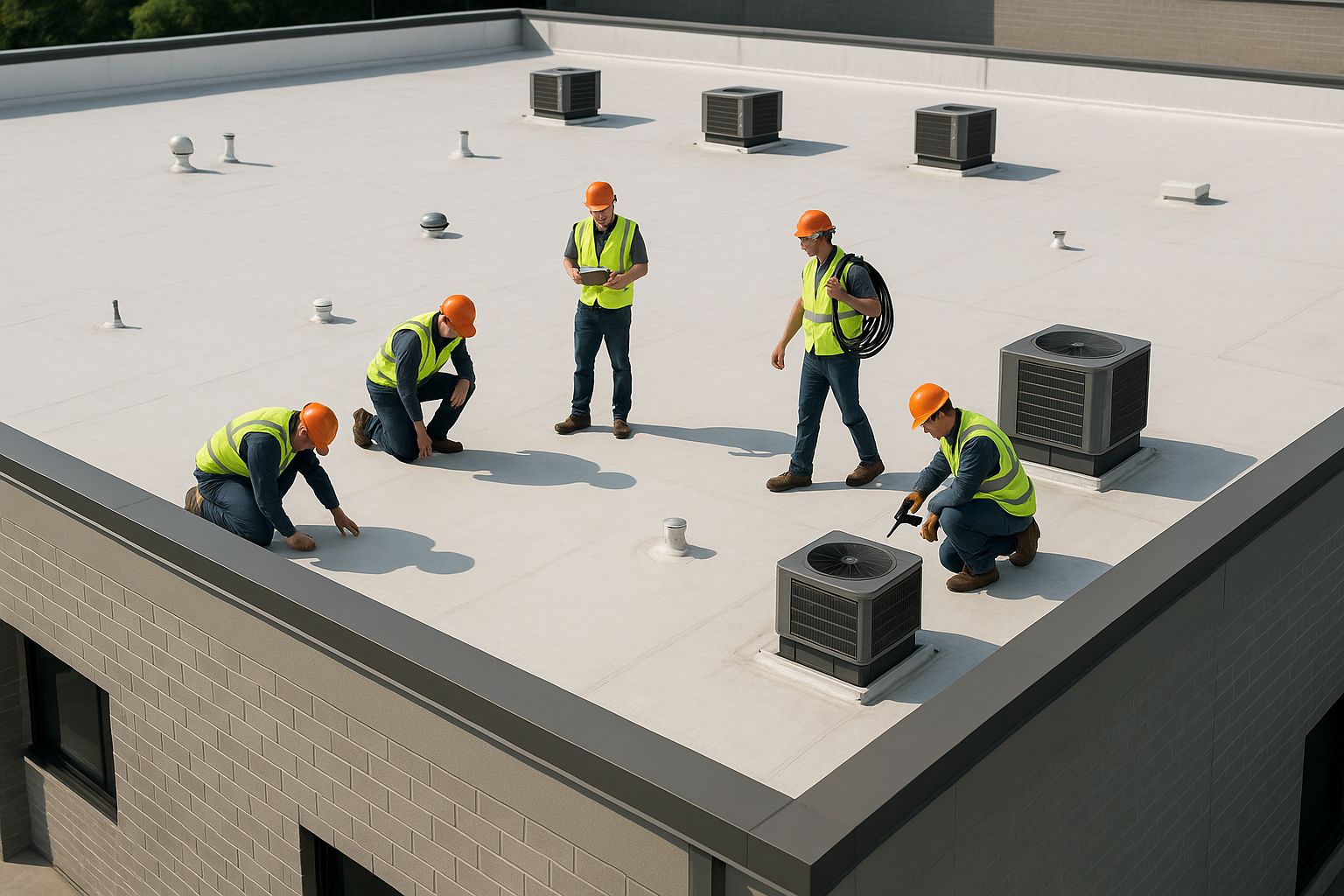
- Understanding and adhering to commercial roofing inspection requirements is essential for safety and compliance.
- Regular inspections help identify potential issues early, saving costs on major repairs.
- Inspection requirements vary by state, with California having specific regulations for commercial properties.
- Staying informed about the latest commercial roofing regulations can prevent unnecessary penalties.
- Partnering with a professional roofing service ensures comprehensive inspections and compliance.
Why Are Commercial Roofing Inspections Essential?
Ensuring Safety and Compliance
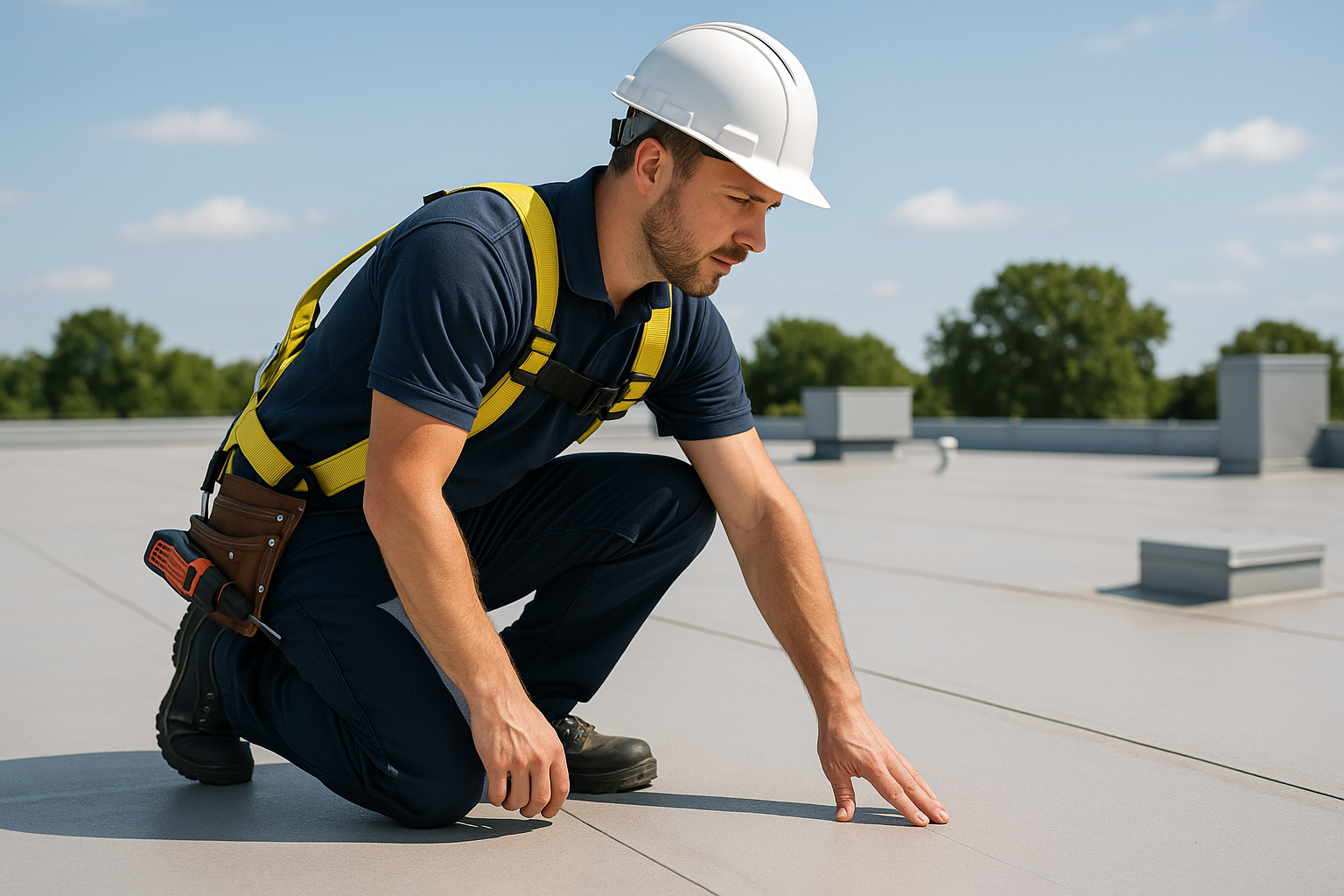
Maintaining the safety and structural integrity of your commercial property is paramount. Regular inspections are a proactive measure to ensure your roof complies with local safety regulations. In California, specific guidelines, like those found in the Safety Regulations in Commercial Roofing, outline the need for periodic assessments to prevent hazards such as leaks or structural failures.
Preventing Costly Repairs
Early detection of roofing issues can save you thousands in repair costs. By adhering to commercial roofing inspection requirements, you can catch minor problems before they escalate. For example, a roof leak repair detected early can cost significantly less than a full roof replacement due to water damage.
Adhering to Local Building Codes
Local building codes are a critical component of commercial roofing inspection requirements. These codes ensure that your roofing system is up to standard, protecting both your property and its occupants. California’s building codes, detailed in our Building Codes for Commercial Roofing article, require regular inspections and adherence to specific materials and installation practices.
Types of Commercial Roofing Inspections
Visual and Physical Inspections
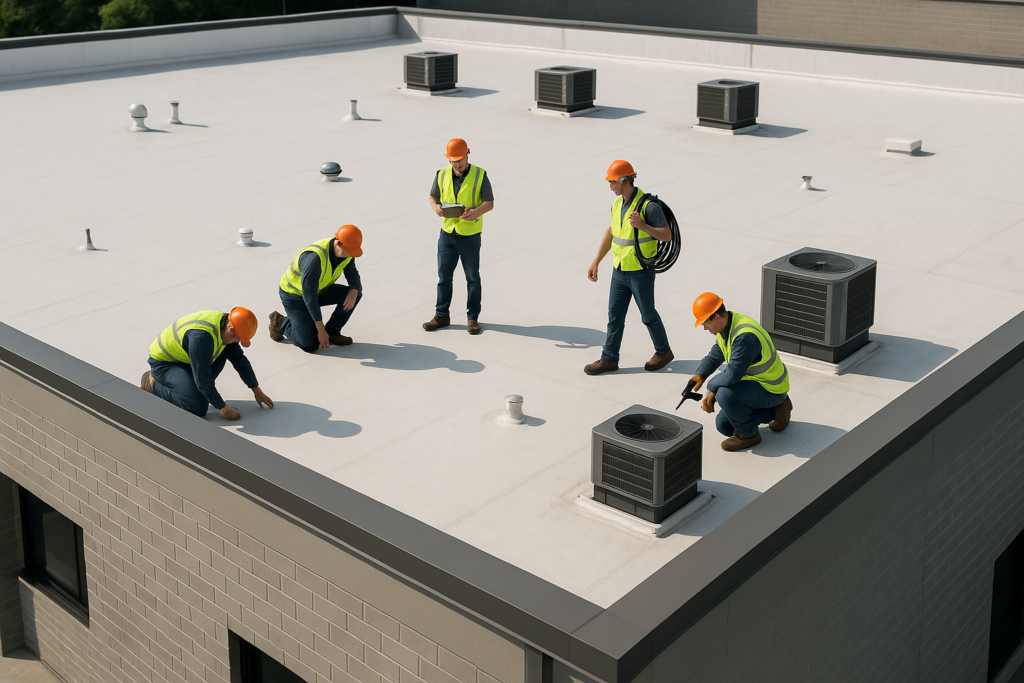
A visual inspection involves a thorough examination of the roof’s surface for signs of wear and damage, such as cracks, blisters, or punctures. Physical inspections, on the other hand, may require more invasive procedures like core sampling to assess the condition of the roofing materials. Both types are integral to the commercial roofing inspection requirements and are often conducted simultaneously to ensure comprehensive assessments.
Infrared and Moisture Surveys
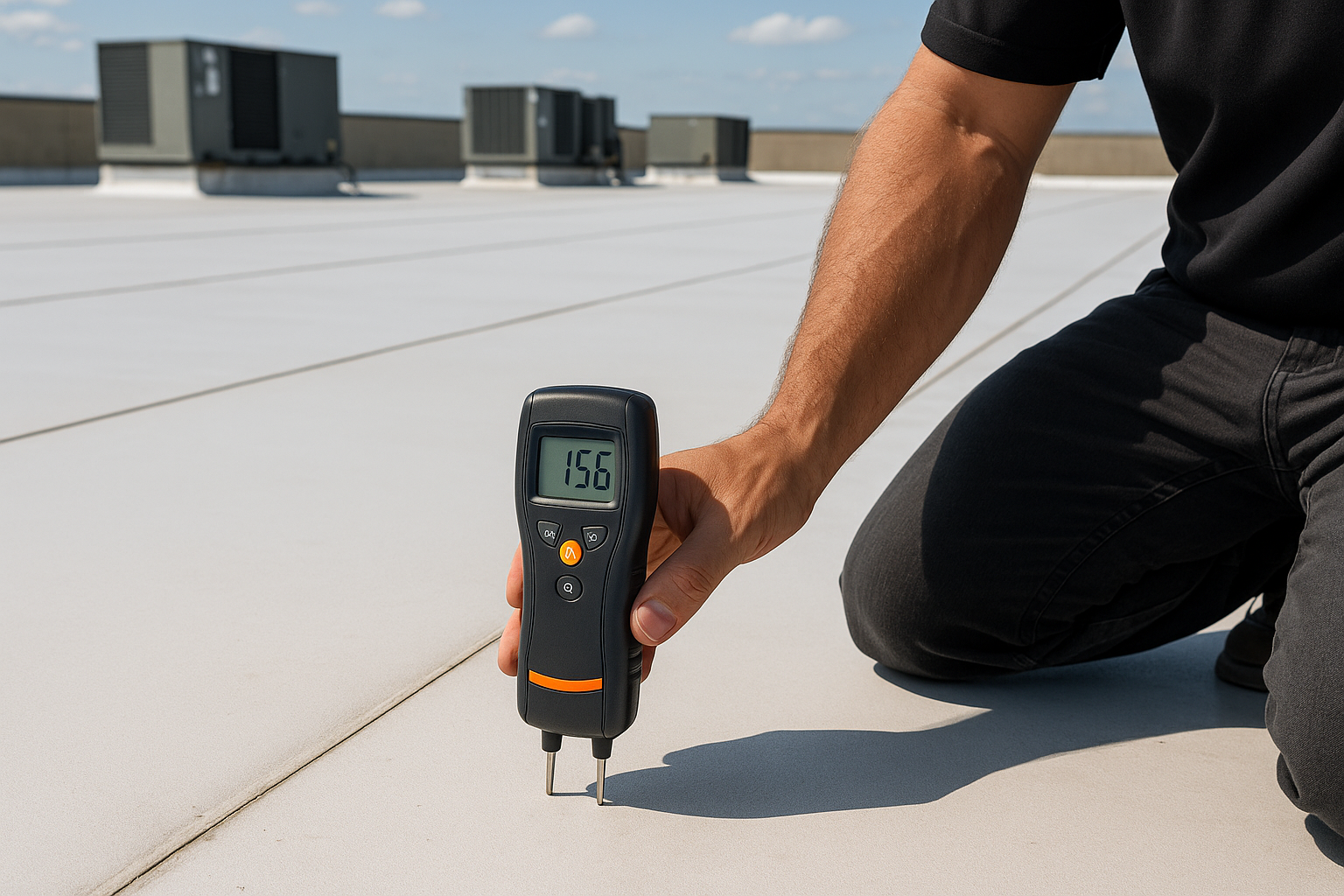
Infrared surveys are a non-destructive method of detecting moisture under the roofing membrane. This technology is particularly useful for flat roofs, where water can pool and cause hidden damage. Moisture surveys complement infrared surveys by providing detailed data on the moisture content within the roofing structure. These advanced techniques are becoming a staple in meeting commercial roofing types requirements.
| Inspection Type | Purpose | Cost Range |
|---|---|---|
| Visual Inspection | Identify surface damage and wear | $300 – $500 |
| Infrared Survey | Detect hidden moisture | $500 – $800 |
| Moisture Survey | Assess moisture levels within the roof | $800 – $1,200 |
Seasonal Inspections
Seasonal inspections are crucial in regions like Southern California, where weather conditions can vary drastically. The hot, dry summers and wet winters demand that roofs are checked for heat and water damage regularly. Conducting inspections at least twice a year, ideally in the spring and fall, aligns with commercial roofing inspection requirements and helps to mitigate weather-related damage.
Meeting Inspection Requirements: Practical Tips
Scheduling Regular Inspections
One of the most straightforward ways to comply with inspection requirements is to establish a routine schedule for inspections. Regular visits by qualified professionals ensure that all potential issues are identified and addressed promptly. Partnering with a reliable service provider, such as those offering roof leak repair services, can help maintain a consistent inspection regimen.
- Schedule inspections twice annually, in spring and fall.
- Ensure inspections cover both visual assessments and advanced surveys.
- Document all findings and repairs for future reference.
Choosing the Right Roofing Materials
Selecting durable and compliant materials can ease the burden of inspections. Materials like metal and TPO are known for their longevity and compliance with commercial roofing inspection requirements. For businesses in California, metal vs asphalt roofing comparisons are critical to understand which material best suits your building’s needs.
Staying Updated on Regulations
Regulations can change, impacting the frequency and type of inspections required. Staying updated on the latest guidelines, such as those discussed in our state guidelines for commercial roofing, is essential. Engaging with industry publications and local authorities can help you remain compliant and avoid penalties.
Frequently Asked Questions
What are the common types of commercial roofing inspections?
Common types include visual inspections, infrared surveys, and moisture assessments. Each type serves a unique purpose in detecting various forms of damage or deterioration in commercial roofing systems.
How often should commercial roofs be inspected?
It’s recommended to conduct inspections at least twice a year, ideally in spring and fall. However, the frequency can vary based on local regulations and the specific needs of the roofing system.
What are the key regulations for commercial roofing inspections in California?
California has specific regulations that require regular inspections to ensure safety and compliance with state building codes. These include detailed assessments of roofing materials and installation methods, as discussed in our roofing regulations for commercial properties.
Conclusion
Understanding and adhering to commercial roofing inspection requirements is critical for maintaining the integrity and compliance of your property’s roof. By scheduling regular inspections, staying informed about local regulations, and choosing the right materials, you can protect your investment and ensure safety for all occupants. For detailed guidance and professional services, consider exploring Roof Titan’s commercial roofing solutions.