
Top 7 Signs Your Commercial Roof Might Be Suffering From Water Damage
Understanding what signs indicate potential water damage in a commercial roof is crucial for maintaining the structural integrity and safety of your building. Water damage can lead to costly repairs and even business disruptions if not addressed promptly. In this guide, we’ll explore the top signs that your commercial roof might be compromised and provide practical advice on how to address these issues effectively.

Key Takeaways
- Water stains and discoloration on ceilings often indicate leaks, necessitating a thorough inspection.
- Blisters or bubbles in roofing material suggest trapped moisture, which can lead to significant damage over time.
- Musty odors in the building may be a sign of mold growth due to persistent leaks.
- Regular roof inspections can prevent further damage and reduce repair costs.
- Ignoring signs of water damage can result in costly business disruptions and structural damage.
Visual and Physical Indicators of Water Damage
Water Stains and Discoloration
One of the most obvious signs indicating potential water damage in a commercial roof is the appearance of water stains and discoloration on the ceilings or walls. These stains often manifest as brownish or yellowish patches, signaling that water has penetrated the roofing material and seeped into the interior. In Southern California, where climates can shift from dry to wet quickly, these signs are crucial to catch early.
When you notice these discolorations, it’s important to address leaks immediately. Ignoring them can lead to more extensive damage, including compromised structural integrity and mold growth, which poses health risks to building occupants.
Blisters and Bubbles on Roofing Material
Blisters or bubbles on the surface of your roofing material often indicate trapped moisture. This condition is prevalent in various types of commercial roofing systems, especially those with flat roofs. Blisters form when moisture becomes trapped between layers of roofing material, causing the surface to lift or bubble.
These issues not only suggest existing water damage but also can lead to further deterioration if left unaddressed. The presence of blisters and bubbles could necessitate a closer inspection by professionals, who can determine the extent of the damage and recommend repairs or replacements as necessary.
Musty Odors and Mold Growth
Persistent musty odors within your building are a red flag for mold growth, typically exacerbated by ongoing water leakage. Mold thrives in moist environments and can quickly spread, causing not only structural damage but also health issues such as respiratory problems for the building’s occupants.
Addressing mold promptly is vital. Begin by identifying the source of moisture and rectifying any leaks. It may be necessary to engage professional mold remediation services to ensure all traces of mold are eradicated, along with repairing any underlying roofing issues that contributed to the problem.
Structural Implications of Water Damage
Roof Deck Deterioration
Water damage often leads to the deterioration of the roof deck, the structural foundation of your roof. Signs of a compromised roof deck include sagging areas or visible warping. This can occur when water infiltrates the decking material, causing it to weaken and potentially collapse if not addressed.
Regular roof inspections can help identify these problems before they become severe. Professional inspectors can assess the condition of the roof deck and suggest the best course of action, whether that’s repair or replacement.
Compromised Insulation
Insulation plays a crucial role in maintaining energy efficiency within a building. When water penetrates your roofing system, it can saturate the insulation, leading to increased energy costs and a less comfortable environment. Wet insulation loses its effectiveness, which can lead to increased heating and cooling expenses.
Replacing damaged insulation is essential to restore the building’s energy efficiency. This replacement process can be costly, so it’s important to address any water intrusion issues promptly to minimize damage.
Corrosion of Metal Components
Metal components, such as flashing or fasteners, are susceptible to corrosion when exposed to moisture over time. Corrosion can weaken these components, leading to leaks and further roof degradation. In commercial buildings, this can affect not only the roof itself but also any associated rooftop equipment.
Routine maintenance and inspections are key to identifying and addressing corrosion early. By replacing corroded parts and sealing any gaps, you can extend the lifespan of your roof and prevent further water damage.
Maintenance and Prevention Strategies
Regular Roof Inspections
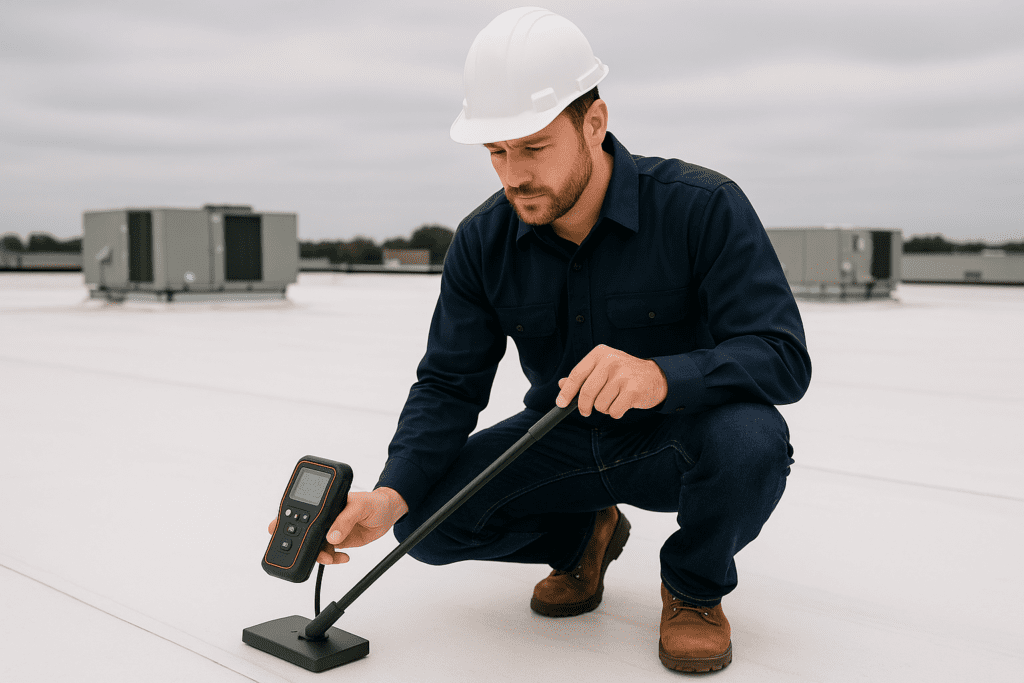
Regular inspections are fundamental to identifying signs of potential water damage before they escalate. Scheduling inspections bi-annually, especially before and after the rainy season in California, helps in catching early signs of wear and tear.
During an inspection, professionals will assess the entire roofing system, including flashing, gutters, and membrane integrity. Implementing a thorough commercial roofing inspection checklist ensures all critical areas are evaluated, preventing minor issues from becoming major problems.
Proactive Maintenance Practices
Proactive maintenance involves regular cleaning and upkeep of the roof and its components. This includes clearing debris, maintaining gutters, and ensuring proper drainage to prevent water accumulation. Implementing these practices can significantly reduce the risk of water damage.
- Schedule routine cleaning to remove leaves and other debris.
- Inspect and maintain gutters and downspouts to ensure proper water flow.
- Seal any minor cracks or gaps in the roofing material promptly.
Timely Repairs and Replacements
Addressing roof leaks and damages promptly is essential to preventing further deterioration. Delaying repairs can lead to extensive water damage and higher repair costs. Evaluating whether to repair or replace parts of the roofing system depends on the extent of the damage and the roof’s overall condition.
In some cases, particularly with older roofs, replacement might be more cost-effective in the long run. Understanding the price range for repairing versus replacing a commercial roof can help in making informed decisions that are financially prudent.
Frequently Asked Questions
How can I prevent water damage on my commercial roof?
Preventing water damage involves regular inspections, proactive maintenance, and timely repairs. Ensure that your roof is inspected at least twice a year and after major weather events. Maintain gutters and downspouts to ensure proper drainage, and address any signs of wear immediately.
What are the costs associated with fixing water damage?
The costs can vary widely depending on the extent of the damage, the materials used, and labor. Minor repairs might cost a few hundred dollars, while extensive repairs or replacements can range from several thousand to tens of thousands. Understanding factors influencing pricing can help budget for necessary repairs.
Is mold always a sign of water damage?
Yes, mold growth is typically a sign of persistent moisture issues, often stemming from leaks or inadequate ventilation. It’s critical to identify and rectify the source of water intrusion to effectively address mold problems.
What should I do if I suspect my roof has water damage?
If you suspect water damage, schedule a professional inspection immediately. Identifying the problem early can prevent further issues and reduce repair costs. Professionals can provide a detailed assessment and recommend the best course of action.
Conclusion
Understanding what signs indicate potential water damage in a commercial roof is essential for maintaining the safety and integrity of your building. By recognizing early warning signs such as water stains, blisters, and musty odors, and implementing regular maintenance and inspections, you can prevent extensive damage and costly repairs. Taking proactive steps now will protect your investment and ensure the longevity of your commercial roofing system.
