
Understanding Safety Regulations in Commercial Roofing
When it comes to ensuring the safety and longevity of commercial buildings, understanding safety regulations in commercial roofing is crucial. These regulations are designed to protect both the workers and the structural integrity of the buildings. In this comprehensive guide, we will explore the essential safety regulations, permit requirements, and practical tips to help you navigate this complex landscape effectively.

Key Takeaways
- Safety regulations are crucial for protecting both workers and building integrity in commercial roofing projects.
- Understanding permit requirements and building codes is essential for compliance and safety.
- Different roofing materials and systems have unique safety considerations and compliance needs.
- Regular inspections and maintenance are key to adhering to safety standards over time.
- California’s climate and seismic activity necessitate specific safety measures in commercial roofing.
Major Safety Regulations in Commercial Roofing
Understanding OSHA Standards
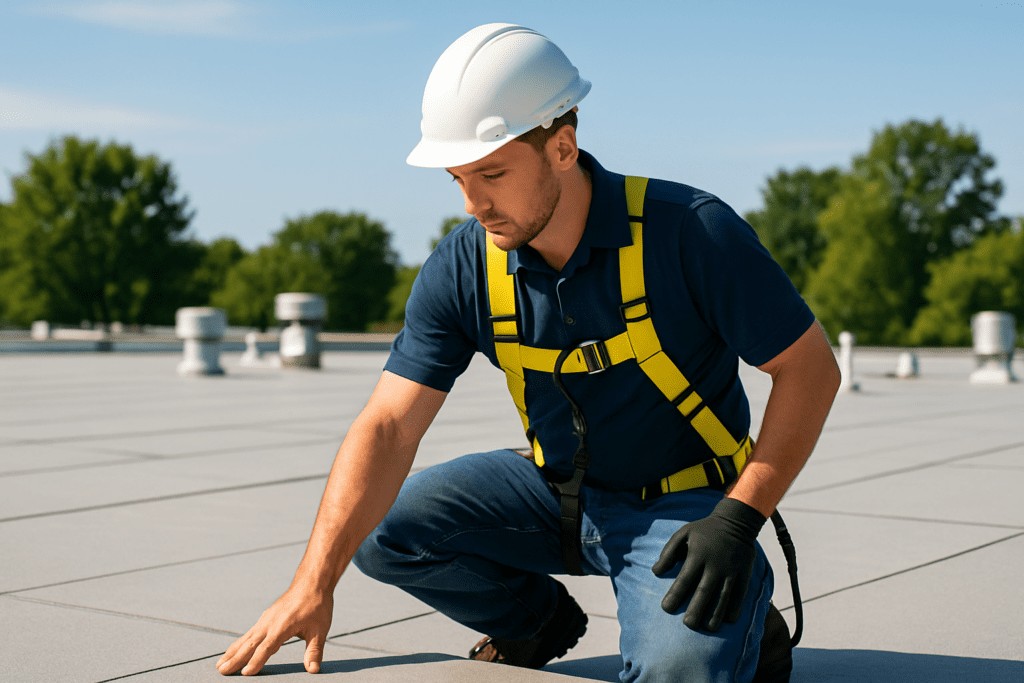
The Occupational Safety and Health Administration (OSHA) sets forth comprehensive safety regulations for commercial roofing. These standards are designed to prevent accidents and injuries on roofing sites. Key requirements include proper use of safety harnesses, guardrails, and personal protective equipment (PPE). For instance, OSHA mandates that workers wear fall protection gear when working at heights of six feet or more.
To comply with these standards, businesses must conduct regular safety training sessions and ensure that all workers are familiar with the protocols. Non-compliance can result in hefty fines and increased risk of workplace injuries. It is essential to keep updated with any changes in these regulations to ensure ongoing compliance.
California-Specific Regulations
Given California’s unique climate and seismic activity, there are additional safety regulations in commercial roofing specific to the state. The California Department of Industrial Relations provides guidelines that focus on earthquake-resistant construction techniques and materials. For example, roofing materials must be fire-resistant and durable enough to withstand seismic impacts.
Additionally, businesses must obtain specific permits before beginning any roofing project. For more detailed information on these requirements, refer to our guide on commercial roofing permit requirements. Adhering to these state-specific regulations not only ensures safety but also helps in avoiding legal issues.
Building Codes and Compliance
Adherence to building codes is another critical aspect of safety regulations in commercial roofing. These codes ensure that roofing systems are installed correctly and can withstand environmental pressures. For instance, the International Building Code (IBC) outlines specific requirements for roof slope, drainage, and material usage.
Commercial property owners must also consider energy efficiency standards. The use of energy-efficient roofing materials can lower energy costs and contribute to sustainability goals. To explore the benefits of these materials, visit our page on energy-efficient roofing materials for commercial use.
Practical Tips for Compliance and Safety
Conducting Regular Inspections
Regular inspections are a proactive approach to maintaining compliance with safety regulations in commercial roofing. Inspections can help identify potential hazards before they become significant issues. It is recommended to schedule inspections at least twice a year, ideally before and after the rainy season in Southern California.
During these inspections, look for signs of wear and tear, water damage, and structural weaknesses. Addressing these issues promptly can prevent more extensive damage and costly repairs. For more comprehensive inspection services, check out our roof leak repair services.
Choosing the Right Materials
Selecting the appropriate materials is crucial for meeting safety regulations in commercial roofing. Materials such as metal and asphalt each have their unique advantages. For instance, metal roofing is highly durable and offers excellent fire resistance, making it suitable for commercial applications. Learn more about the benefits of metal roofing for your business.
Comparatively, asphalt shingles are cost-effective and provide good insulation. When selecting materials, consider factors such as lifespan, cost, and local climate conditions. For a detailed comparison, see our guide on the cost comparison of commercial roofing materials.
| Material | Durability | Cost |
|---|---|---|
| Metal | High | $$$ |
| Asphalt | Moderate | $$ |
| TPO | High | $$ |
Implementing Safety Protocols
Implementing robust safety protocols is essential for compliance with safety regulations in commercial roofing. This includes clearly marking hazardous areas, using proper signage, and maintaining clean and organized work sites. It’s also important to have emergency plans in place in case of accidents or severe weather events.
Here are some practical tips for enhancing safety protocols:
- Ensure all workers are trained in first aid and emergency response.
- Regularly update safety equipment and conduct drills.
- Use technology such as drones for safer inspections.
Frequently Asked Questions
What are the most common safety hazards in commercial roofing?
The most common safety hazards include falls from heights, electrical hazards, and injuries from lifting heavy materials. Adhering to OSHA standards and implementing proper safety measures can mitigate these risks.
How often should commercial roofs be inspected for compliance?
Commercial roofs should ideally be inspected bi-annually, typically before and after the rainy season. Regular inspections help ensure compliance with safety regulations in commercial roofing and prolong the lifespan of the roof.
What are the consequences of non-compliance with safety regulations?
Non-compliance can result in significant fines, increased liability, and potential legal action. It can also lead to accidents and injuries, underscoring the importance of adhering to all safety regulations and guidelines.
Conclusion
Understanding and adhering to safety regulations in commercial roofing are vital for ensuring the safety of both workers and commercial properties. By staying informed about OSHA standards, state-specific regulations, and building codes, you can effectively safeguard your investment. Regular inspections, informed material choices, and rigorous safety protocols will not only prevent accidents but also enhance the overall integrity of your roofing system. For further guidance, visit our commercial roofing page and explore our resources.
