10 Warning Signs Your Commercial Roof Needs Repair or Replacement You Can’t Ignore
As a commercial property owner, ensuring the longevity of your building’s roof is crucial. But how can you tell if your commercial roof needs repair or replacement? Recognizing the signs early can save you from costly repairs and potential business interruptions. In this comprehensive guide, we’ll explore ten key warning signs that indicate your commercial roof may need professional attention.

Key Takeaways
- Regular inspections can help identify early signs of roof damage and prevent costly repairs.
- Water stains, mold, and leaks are clear indicators that your commercial roof needs repair.
- Understanding the age and material of your roof can help determine whether repair or replacement is more cost-effective.
- Ignoring roof issues can lead to significant structural damage and increased repair costs.
- Consulting with a professional roofing service can provide clarity on the best course of action.
Early Warning Signs of Roof Damage
Visible Leaks and Water Stains
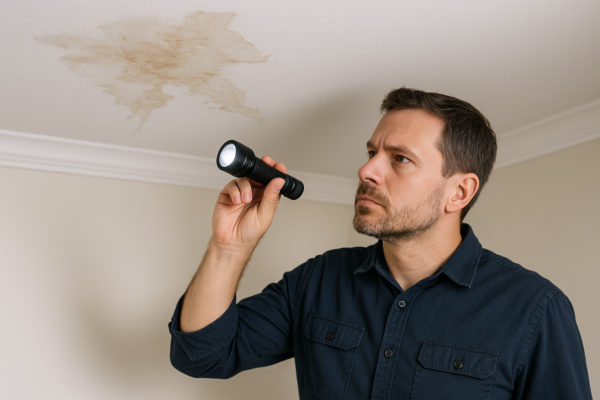
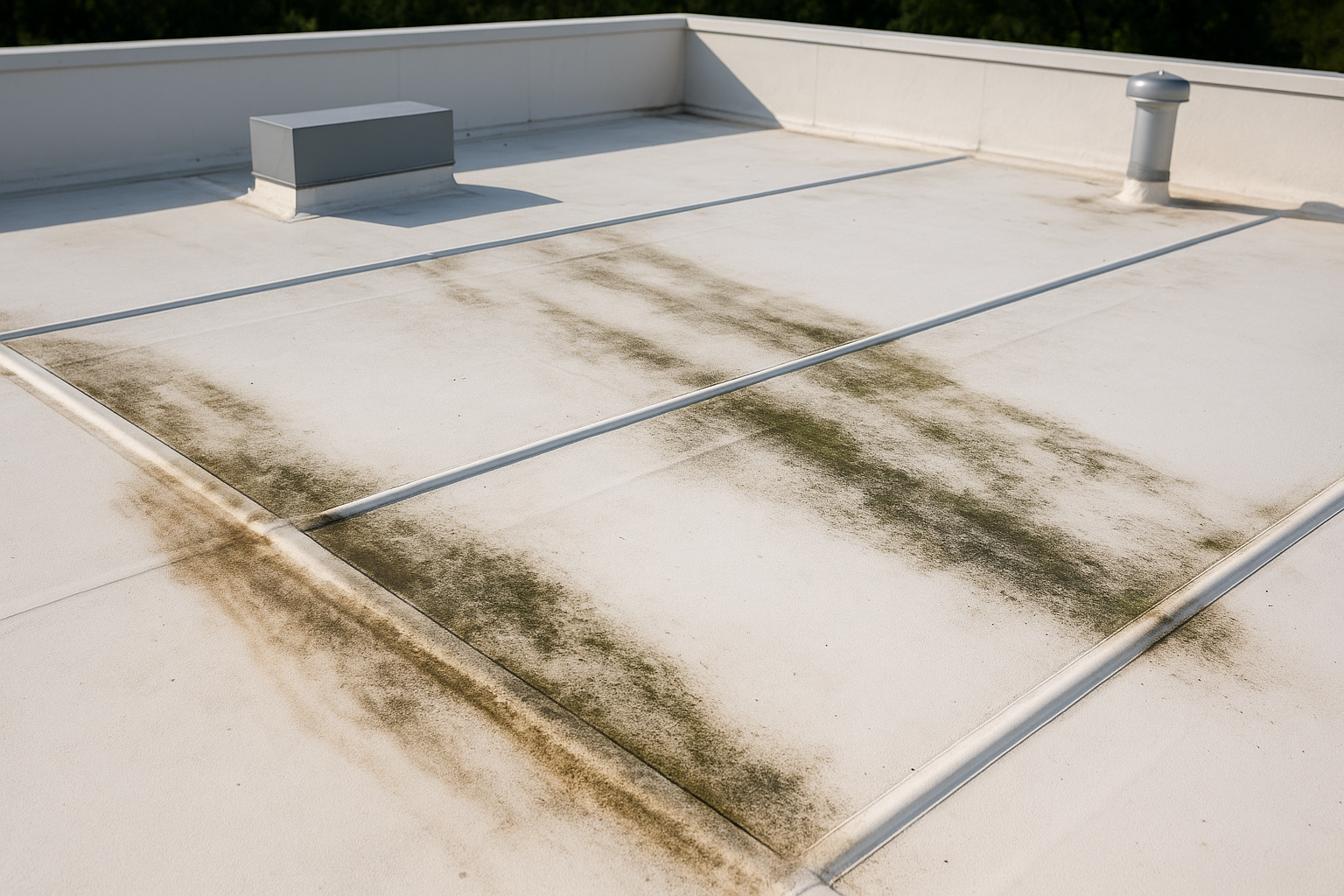
If you’re noticing water stains on the ceiling or walls of your commercial space, it could be a sign of a roof leak. Leaks are often a result of damaged or missing shingles, flashing issues, or poor roof installation. In Southern California, where unexpected rains can occur, such leaks can quickly worsen. It is essential to address these issues swiftly by considering a professional roof leak repair to prevent further damage.
Moreover, consistent water intrusion can lead to mold growth, which poses health risks to employees and customers. Mold remediation can be expensive, making early detection and repair of leaks a financially wise choice. According to industry estimates, mold removal can cost between $500 to $6,000 depending on the extent of the infestation.
Damaged or Missing Shingles
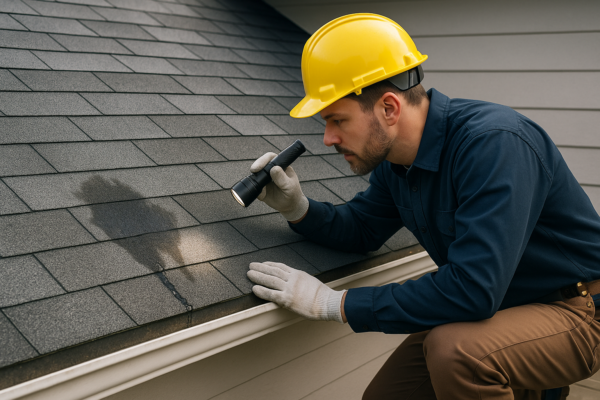
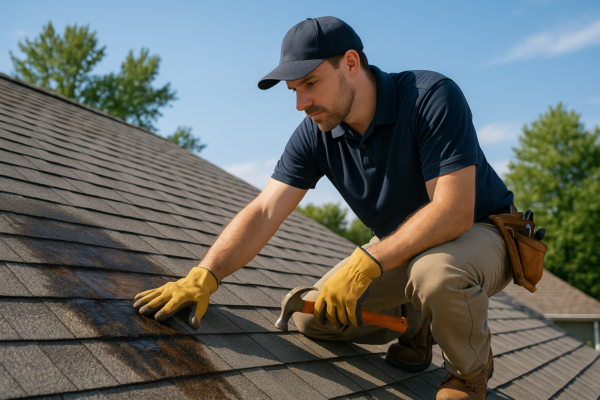
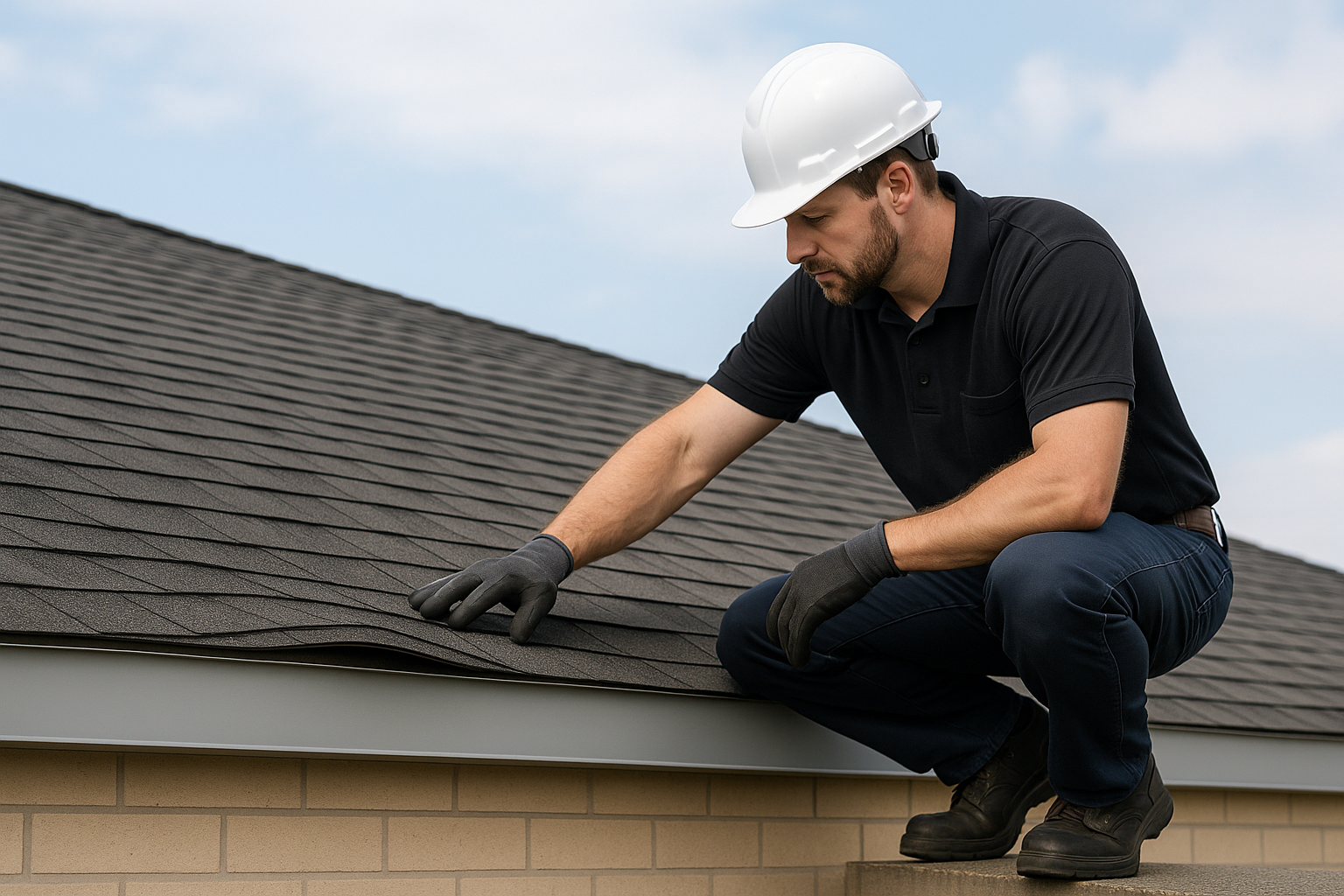
Shingles play a critical role in protecting your commercial roof from the elements. If you notice shingles that are cracked, curled, or missing, your roof’s ability to shed water effectively is compromised. This is a common issue with asphalt shingles, especially after strong winds or storms.
In comparison, metal roofing systems, known for their durability, may show signs of rust or corrosion instead. Therefore, it’s essential to select roofing materials that best suit your business needs, as discussed in our article on the benefits of metal roofing.
Pooling Water on Flat Roofs
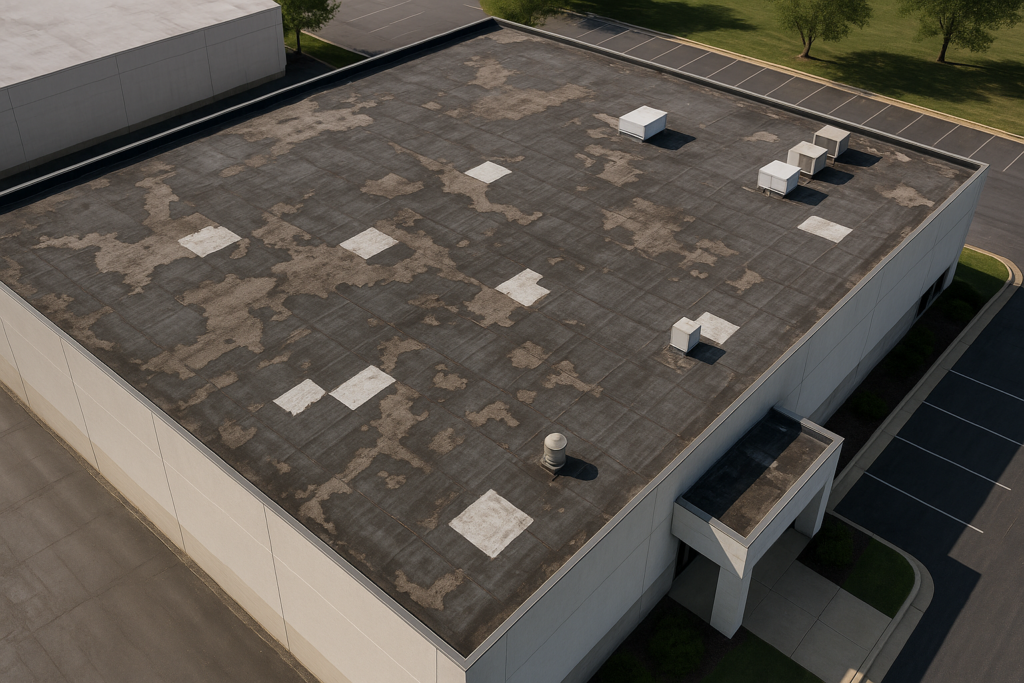
Commercial buildings often have flat roofs, which are prone to water pooling. This occurs when the drainage system is inadequate or clogged, leading to standing water that can deteriorate the roofing material over time. If untreated, this can cause leaks and structural damage.
Regular maintenance and inspection of drainage systems are essential to prevent such issues. Our guide on flat roofing options offers insights into more effective drainage solutions that can mitigate these risks.
Structural Concerns and Material Wear
Sagging Roof Deck
A sagging roof deck is a serious concern that may indicate underlying structural issues. This problem can arise from prolonged water exposure or excessive weight on the roof, such as heavy equipment or debris. A sagging deck not only threatens the structural integrity of the building but also increases the risk of collapse.
For commercial properties, addressing these issues promptly can prevent costly disruptions. Consulting with local commercial roofing repair experts can provide a thorough assessment and necessary repairs.
Excessive Granule Loss
Granules are the top protective layer on asphalt shingles and are essential for reflecting UV rays and providing fire resistance. Excessive granule loss is a sign of aging or damaged shingles. You might notice granules in gutters or downspouts, indicating that your roof is nearing the end of its lifespan.
In contrast, materials like TPO or EPDM used in flat roofs might show signs of cracking or blistering instead. Understanding different commercial roofing types helps in identifying the specific signs of wear for each material.
Increased Energy Bills
If you’ve noticed a spike in your energy bills, it could be due to poor roof insulation or ventilation. A damaged roof can allow heat to escape, forcing HVAC systems to work harder to maintain a stable indoor temperature. This is particularly relevant in the fluctuating Southern California climate.
Ensuring your roof’s insulation and ventilation systems are intact can lead to significant energy savings. For a detailed comparison of costs, our article on the price range for repairing vs. replacing a commercial roof can provide valuable insights.
When to Consider Replacement Over Repair
Age of the Roof
The age of your commercial roof is a primary factor in deciding between repair and replacement. Most commercial roofing materials have a lifespan of 15 to 30 years, depending on the material and environmental conditions. For instance, EPDM roofs may last up to 30 years, while asphalt shingles typically last 15 to 20 years.
When considering the cost difference between repairing and replacing a commercial roof, factoring in the age can help determine the more cost-effective option.
Frequent Need for Repairs
If your commercial roof requires frequent repairs, it may be more economical to replace it altogether. Constant patchwork not only adds up financially but also indicates that the roof’s overall integrity is compromised.
For businesses looking to minimize disruptions, a comprehensive replacement may be more beneficial. Our article on consequences of delaying commercial roof repairs highlights the risks and potential increased costs of postponing necessary work.
Comparison: Repair vs. Replacement Costs
| Factor | Repair Costs | Replacement Costs |
|---|---|---|
| Initial Expense | $5,000 – $15,000 | $20,000 – $100,000+ |
| Longevity | Short-term (2-5 years) | Long-term (15-30 years) |
| Maintenance Needs | Frequent | Minimal |
| Business Disruption | Minimal | Potentially Significant |
| Warranty | Limited | Comprehensive |
Frequently Asked Questions
How can I tell if my commercial roof needs repair or replacement?
There are several signs to look for, including visible leaks, water stains, missing shingles, and increased energy bills. Regular inspections and maintenance can help identify these issues before they escalate.
What is the most common cause of commercial roof failure?
The most common causes include water intrusion due to poor installation, lack of maintenance, and severe weather conditions. Understanding common issues with commercial roofing systems can help prevent these failures.
How often should I have my commercial roof inspected?
It’s recommended to have your commercial roof inspected at least twice a year, especially after significant weather events. This can help catch potential problems early and maintain the roof’s integrity.
Can I perform roof repairs myself, or should I hire a professional?
While minor repairs might seem manageable, it’s advisable to hire a professional roofing service. They have the expertise and tools necessary to perform repairs safely and effectively, reducing the risk of further damage.
Conclusion
Knowing how to tell if your commercial roof needs repair or replacement is essential for maintaining the safety and efficiency of your building. By understanding the warning signs and consulting with professionals, you can make informed decisions that protect your investment. For more comprehensive guidance, consider visiting our commercial roofing page and explore our resources on effective roof management.