Best Materials for Durable Commercial Roofs
When choosing the **best materials for commercial roofs**, it’s essential to consider durability, cost-effectiveness, and climate suitability, especially in regions like the San Gabriel Valley, California. This guide will explore the top roofing materials, offering detailed comparisons and practical advice to help you make informed decisions for your commercial property.
Key Takeaways
- Choosing the right roofing material involves balancing cost, durability, and climate considerations.
- Metal, TPO, and EPDM are among the most popular materials for commercial roofs due to their resilience and cost-effectiveness.
- Understanding the pros and cons of each material can lead to better long-term investment decisions.
- Routine maintenance and timely repairs can extend the lifespan of your commercial roof.
- Consult with experts for tailored recommendations based on your specific building needs.
Popular Commercial Roofing Materials
Metal Roofing
Metal roofing is a top choice for commercial properties due to its **durability and longevity**. Common metals used include aluminum, steel, and copper, each offering unique benefits. Metal roofs can last up to 50 years with proper maintenance, making them a cost-effective option in the long run. They are also highly resistant to fire, wind, and weather damage, which is crucial in regions like Southern California, where weather conditions can vary significantly.
In addition to durability, metal roofs are environmentally friendly. They are often made from recycled materials and can be recycled at the end of their lifespan. This sustainability aspect can be a significant selling point for environmentally conscious businesses. For more information on why metal roofing might be the right choice for your business, check out the benefits of metal roofing.
However, the initial cost of metal roofing can be higher than other materials. Installation requires skilled labor, which can increase the overall price. Despite this, the reduced maintenance costs and enhanced durability often offset the initial expenses over time.

TPO (Thermoplastic Olefin) Roofing
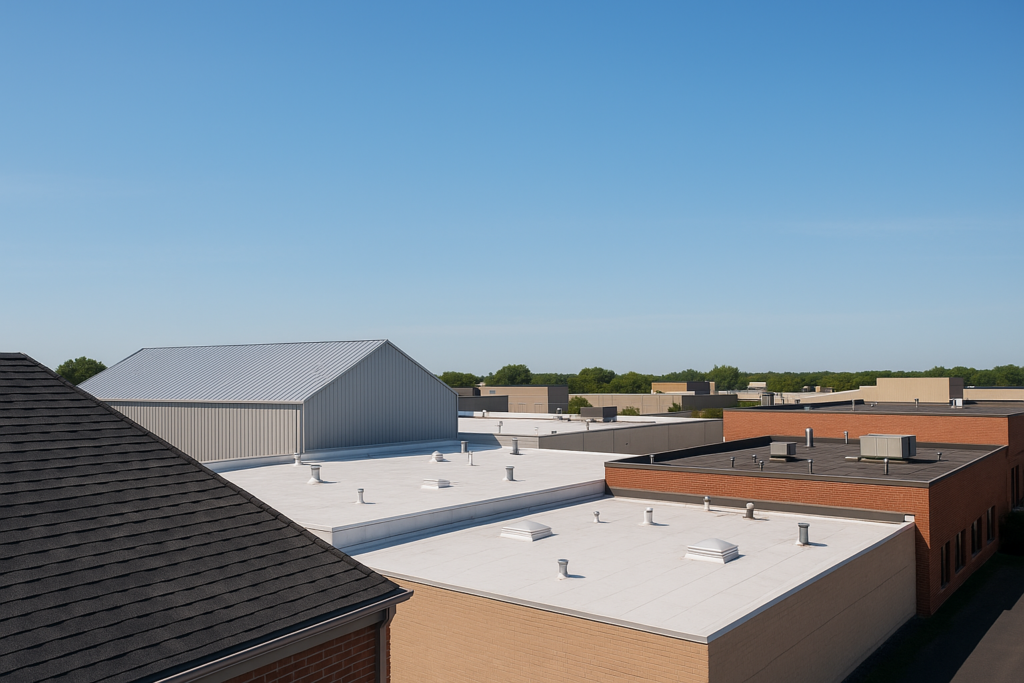
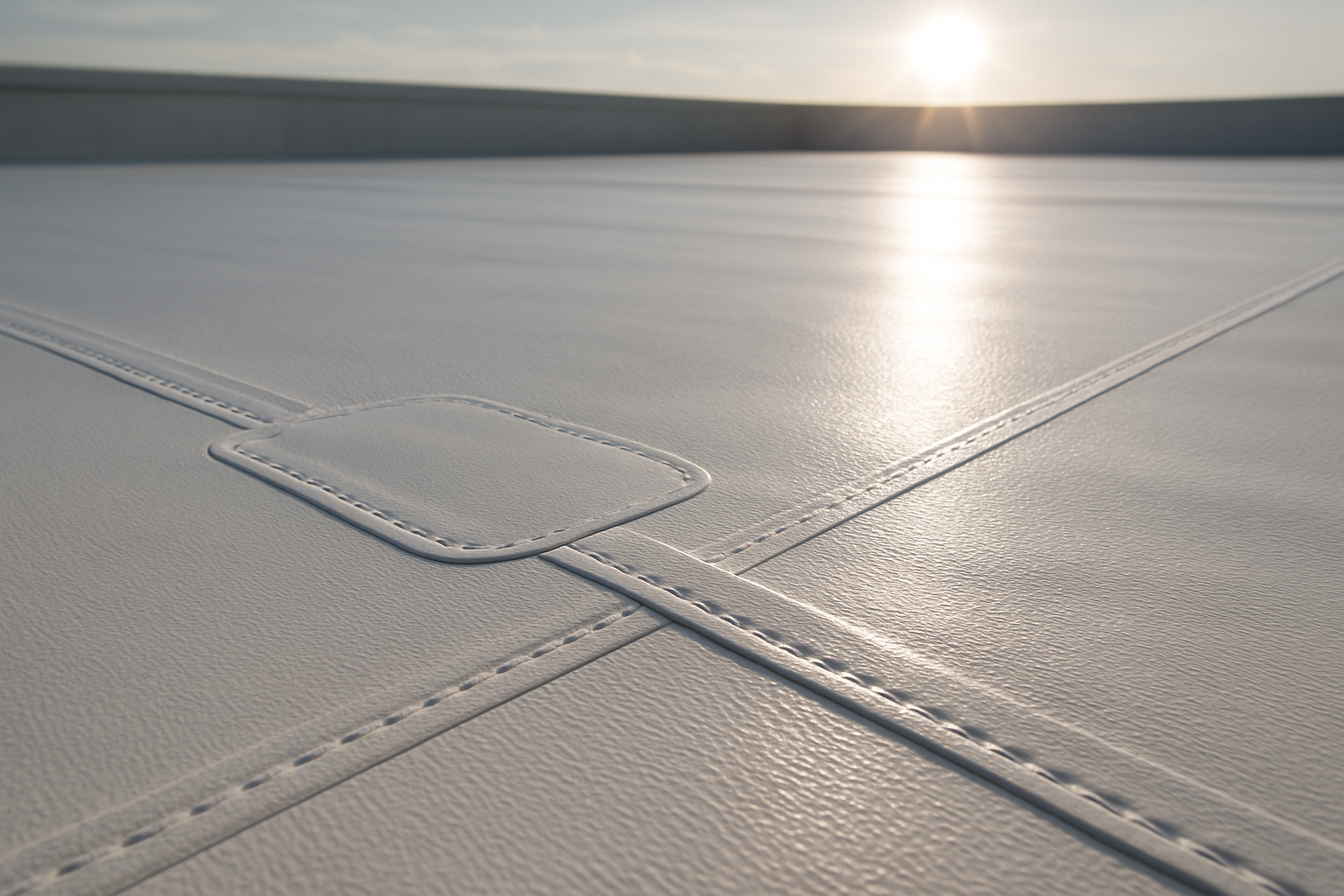
TPO is a single-ply roofing membrane known for its **energy efficiency** and cost-effectiveness. It’s particularly popular in commercial settings due to its reflective properties, which help reduce cooling costs by reflecting sunlight. Given California’s sunny climate, this can be a significant advantage.
Another benefit of TPO roofing is its resistance to tears, punctures, and dirt accumulation. This makes it an ideal option for flat roofing systems, which are common in commercial buildings. If you’re exploring flat roofing options, you can learn more about them with our guide on flat roofing systems.
On the downside, TPO has a shorter lifespan compared to metal roofs, typically lasting 15-20 years. However, with proper maintenance, the durability of TPO can be extended, making it a viable option for many businesses.
EPDM (Ethylene Propylene Diene Monomer) Roofing
EPDM roofing is another popular choice, particularly for commercial buildings with flat roofs. Known for its **durability and flexibility**, EPDM is a synthetic rubber membrane that can withstand extreme weather conditions. It is also highly resistant to UV rays, ozone, and thermal shock, providing excellent performance in Southern California’s diverse climate.
One of the significant advantages of EPDM is its relatively low cost. It’s one of the most affordable options for commercial roofing, both in terms of materials and installation. Moreover, EPDM requires minimal maintenance, further reducing long-term costs.
However, EPDM’s black color can absorb heat, potentially increasing cooling costs. White EPDM options are available to address this issue, offering the same durability with better energy efficiency. For more insights into the best materials for preventing leaks, you can explore our detailed comparison of roofing materials.
Comparing Commercial Roofing Materials
Cost vs. Longevity
When evaluating the **best materials for commercial roofs**, it’s crucial to consider both cost and longevity. While metal roofing might have a higher upfront cost, its long lifespan and low maintenance make it a savvy investment. On the other hand, TPO and EPDM offer lower initial costs but may require more frequent replacements.
Here’s a comparison table to help you understand the cost and lifespan of these materials:
| Material | Average Cost per Square Foot | Expected Lifespan |
|---|---|---|
| Metal | $7 – $12 | 40-70 years |
| TPO | $5 – $8 | 15-20 years |
| EPDM | $4 – $7 | 25-30 years |
For businesses prioritizing long-term investments, metal roofing might be the best choice. In contrast, those looking for a more budget-friendly option might opt for TPO or EPDM.
Energy Efficiency
Energy efficiency is a key consideration, especially in sunny regions like California. **TPO roofing** offers high reflectivity, which helps to reduce energy consumption by keeping buildings cooler. EPDM, particularly in its white form, also provides good energy efficiency, while metal roofs can be coated to enhance their reflectivity.
Choosing energy-efficient materials can significantly lower utility bills, making them a smart choice for cost-conscious businesses. For more tips on seasonal maintenance to optimize energy efficiency, consider our seasonal roof maintenance checklist.
Investing in energy-efficient roofing not only reduces costs but also contributes to a greener environment, aligning with sustainability goals.
Weather Resistance
In Southern California, commercial roofs must withstand a variety of weather conditions. **Metal roofing** excels in this area, offering excellent resistance to wind, rain, and fire. TPO and EPDM also perform well, with TPO providing superior protection against dirt and debris, while EPDM is known for its excellent thermal resistance.
Ensuring your roof can handle local weather is crucial for its longevity and performance. Regular inspections and maintenance, as outlined in our seasonal maintenance guide, can help identify potential issues early.
For businesses in areas prone to extreme weather, investing in robust, weather-resistant materials is critical for protecting your property and minimizing repair costs.
Maintenance and Repair Considerations
Routine Maintenance
Regardless of the material you choose, regular maintenance is vital for extending the life of your commercial roof. This includes bi-annual inspections, cleaning debris, and checking for signs of wear and tear. Regular maintenance can prevent minor issues from developing into major problems, saving you from costly repairs.
Here are some practical tips for maintaining your commercial roof:
- Conduct inspections in spring and fall to address seasonal changes.
- Clear gutters and drains to prevent water buildup.
- Repair minor damage immediately to avoid escalation.
- Ensure proper ventilation to reduce moisture accumulation.
Implementing a comprehensive maintenance plan can significantly enhance the durability of your roof. For a complete guide on maintenance, consider reading our seasonal checklist.
Common Repair Needs
Even the **best materials for commercial roofs** may require repairs over time. Common issues include leaks, punctures, and weather damage. Addressing these promptly is crucial to prevent further damage and prolong your roof’s lifespan.
Understanding the average costs for roof leak repair can help you budget effectively. For detailed insights into repair expenses, explore our article on roof repair costs.
Timely repairs not only extend the life of your roofing system but also ensure the safety and comfort of your building’s occupants.
Choosing the Right Repair Materials
The choice of repair materials can significantly affect the longevity and performance of your commercial roof. Selecting materials that match the original roofing can maintain consistency and ensure the repairs blend seamlessly.
For a detailed analysis of the best repair materials, consider reading about the top choices for fixing roof leaks. Matching repair materials to your existing roof can prevent potential compatibility issues.
Investing in high-quality repair materials can save you time and money in the long run by reducing the frequency of future repairs.
Frequently Asked Questions
What is the most durable commercial roofing material?
Metal roofing is generally considered the most durable option for commercial roofs, with a lifespan of up to 70 years. Its resistance to various weather conditions makes it an excellent long-term investment.
How do I choose the best roofing material for my commercial building?
When choosing the **best materials for commercial roofs**, consider factors such as the local climate, budget, energy efficiency, and maintenance requirements. Consulting with roofing professionals can provide tailored recommendations for your specific needs.
Are energy-efficient roofing materials worth the investment?
Yes, energy-efficient materials like TPO and white EPDM can significantly reduce energy costs by reflecting sunlight and keeping buildings cooler. Over time, these savings can offset the initial investment, making them a smart choice for businesses.
How often should I inspect my commercial roof?
It’s advisable to conduct roof inspections at least twice a year, typically in the spring and fall. Regular inspections can help identify issues early and prevent costly repairs. For more detailed guidance, refer to our seasonal maintenance checklist.
Conclusion
Choosing the **best materials for commercial roofs** involves balancing durability, cost, and environmental factors. Metal, TPO, and EPDM are top contenders, each offering unique advantages. Regular maintenance and timely repairs are crucial for maximizing your roof’s lifespan. By investing in high-quality materials and adhering to a consistent maintenance schedule, you can ensure the long-term success and efficiency of your commercial roofing system. For more information on commercial roofing options, explore our essential guide for businesses. For more information, visit our Roof Leak Repair Services.