
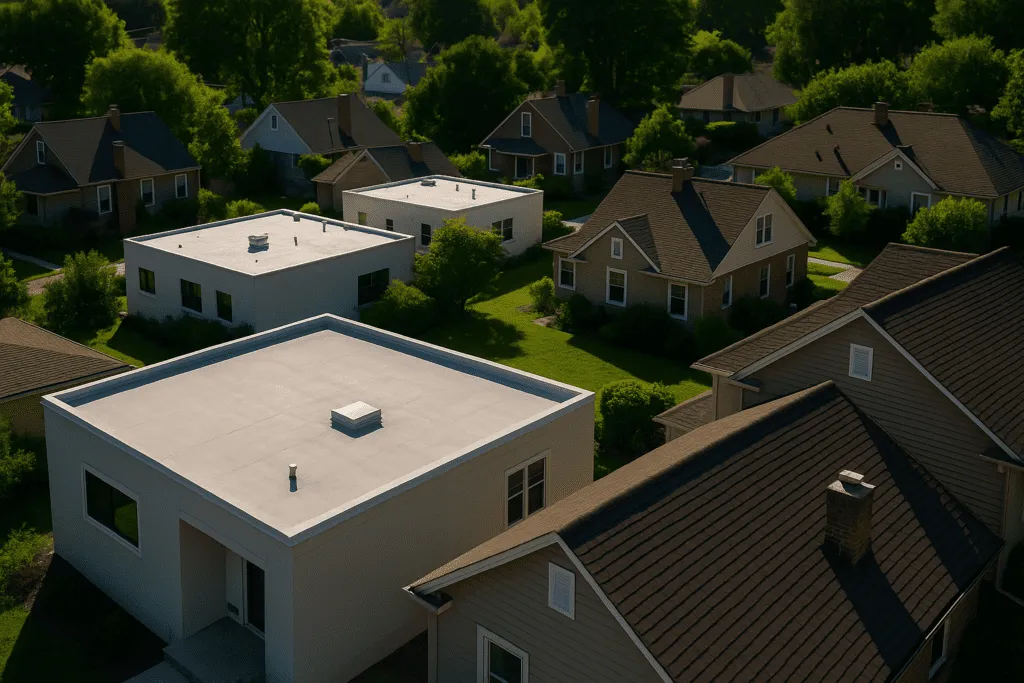
Flat vs Sloped Roofing Materials: Which Is Best for You?
Choosing the right roofing material is a critical decision for any homeowner, especially when considering the **flat vs sloped roofing materials comparison**. Each type of roof has its own benefits and challenges, particularly influenced by the climate of Southern California. This guide will help you understand the differences, making it easier to decide which option suits your home best.

Key Takeaways
- Flat roofing materials are generally more cost-effective but require more maintenance in wet climates.
- Sloped roofs offer better drainage and are often more durable in areas with high rainfall.
- Material choice impacts energy efficiency, with options available for both flat and sloped roofs.
- Understanding your local climate is crucial in the **flat vs sloped roofing materials comparison**.
- Consulting a professional can help tailor the best solution for your specific roofing needs.
Understanding the Basics of Flat Roofing Materials
Common Types of Flat Roofing Materials
Flat roofs are popular for commercial buildings and some modern homes. They offer a sleek, minimalistic look and can be more cost-effective. The primary materials used in flat roofing include TPO (Thermoplastic Olefin), EPDM (Ethylene Propylene Diene Monomer), and built-up roofing (BUR). Understanding the **types of roofing materials for businesses** is essential for making the right choice.
TPO is known for its energy efficiency, making it a popular choice in sunny climates like Southern California. It’s reflective, which helps reduce cooling costs. EPDM, often called rubber roofing, is durable and can last up to 25 years with proper maintenance. BUR involves layers of tar and gravel and is known for its durability and low maintenance.
Benefits and Challenges of Flat Roofs
One of the main benefits of flat roofs is their cost-effectiveness. According to the cost-effective flat roofing materials guide, they are generally cheaper to install than sloped roofs. However, they require more maintenance because they are more susceptible to leaks, especially during heavy rainfalls, common in the winter months in California.
Flat roofs also offer the advantage of additional outdoor space. Some homeowners use them for rooftop gardens or solar panel installations. However, the main challenge remains water drainage. Without the natural slope, water can pool and cause damage over time if not properly maintained.
Cost Considerations
When considering the **flat vs sloped roofing materials comparison**, cost is a significant factor. On average, flat roofing materials can range from $5 to $10 per square foot installed, according to the cost comparison of commercial roofing materials. While initial costs are lower, ongoing maintenance must be factored into the total cost of ownership.
In contrast, sloped roofs, while more expensive initially, often incur lower maintenance costs over time due to their natural drainage capabilities. Deciding between these options requires evaluating both short-term and long-term financial impacts.
Exploring Sloped Roofing Materials
Popular Sloped Roofing Materials
Sloped roofs are the traditional choice for residential homes, providing excellent drainage and a classic aesthetic. Common materials used include asphalt shingles, metal, and clay tiles. Each of these materials offers distinct advantages and considerations in terms of durability, cost, and energy efficiency.
Asphalt shingles are the most popular due to their affordability and ease of installation. They typically cost between $3 to $5 per square foot. Metal roofing, while more expensive initially at $7 to $12 per square foot, offers superior longevity and durability. Clay tiles, often used in Spanish-style homes, provide a unique aesthetic and can last a lifetime with proper care.
Advantages of Sloped Roofs
The natural slope of these roofs provides effective water drainage, which is a critical advantage in areas prone to heavy rainfall. This reduces the risk of water pooling and subsequent damage, minimizing the likelihood of needing frequent roof leak repairs.
Sloped roofs also offer better insulation and energy efficiency, particularly when using materials like metal or clay that reflect sunlight and reduce heat absorption. This can lead to significant savings on energy bills, particularly during the hot summer months in Southern California.
Installation and Maintenance
Installation of sloped roofs can be more complex and labor-intensive, which contributes to the higher initial cost. However, the maintenance requirements are generally lower compared to flat roofs. The natural drainage reduces the frequency and severity of leaks, making them a reliable choice for many homeowners.
Regular inspections are still necessary to ensure the integrity of the roof, especially after severe weather events. For a comprehensive guide on maintaining sloped roofs, you can explore our guide to the best roofing materials for leaks.
Comparing Flat and Sloped Roofing Materials
Performance and Durability
When comparing **flat vs sloped roofing materials**, performance and durability are crucial factors. Flat roofs can be more vulnerable to environmental stress, requiring materials like TPO or EPDM that provide resilience against UV rays and temperature fluctuations. Sloped roofs, with materials like metal or asphalt, generally offer longer lifespans and better resilience against water damage.
For those interested in the **highly durable roofing materials** available, sloped roofs typically outperform flat ones due to their inherent design advantages. This makes them a preferred choice for those seeking longevity and minimal upkeep.
Energy Efficiency
Energy efficiency is another essential consideration in the **flat vs sloped roofing materials comparison**. Flat roofs can be highly efficient when using reflective materials like TPO, which can help reduce cooling costs significantly. Sloped roofs, however, offer superior insulation with materials like metal and clay tiles, which are effective at reflecting heat.
For those seeking to enhance their home’s energy efficiency, our guide on energy-saving roofing materials can provide additional insights into the best choices for your needs.
- Consider the climate: Choose materials that perform well in your local weather conditions.
- Evaluate long-term costs: Factor in both installation and maintenance expenses when comparing options.
- Consult with experts: Professional advice can help tailor solutions specific to your home.
Cost and Aesthetic Considerations
Beyond performance, aesthetics and cost are significant factors in the **flat vs sloped roofing materials comparison**. Flat roofs offer a modern appearance that can complement contemporary architectural styles. In contrast, sloped roofs provide a traditional look that suits many residential home designs.
Cost varies widely based on material choice and installation complexity. It’s important to weigh these factors against the aesthetic and functional benefits each roofing type offers. For a detailed analysis of material costs, the best commercial roofing materials guide provides a comprehensive overview.
| Material Type | Cost per Square Foot | Average Lifespan |
|---|---|---|
| Asphalt Shingles | $3 – $5 | 20 – 30 years |
| Metal Roofing | $7 – $12 | 40 – 70 years |
| TPO | $5 – $10 | 15 – 20 years |
| EPDM | $4 – $8 | 25 – 30 years |
| Clay Tiles | $10 – $18 | 50 – 100 years |
Frequently Asked Questions
What is the best roofing material for a flat roof?
The best material for a flat roof often depends on your specific needs and climate. TPO is popular for its energy efficiency and durability, especially in sunny climates like Southern California. For cost-effective options, EPDM is a reliable choice due to its durability and lower maintenance needs.
Are sloped roofs more energy-efficient than flat roofs?
Sloped roofs can be more energy-efficient, especially when using materials like metal or clay tiles that reflect sunlight and provide better insulation. However, flat roofs can also achieve high energy efficiency with reflective materials like TPO. The choice often depends on the specific materials used and your local climate conditions.
How often should flat roofs be inspected for maintenance?
Flat roofs should be inspected at least twice a year and after any severe weather events. Regular inspections help identify potential issues early, such as pooling water or leaks, which are common challenges for flat roofs. This proactive approach can extend the lifespan of your roof.
What are the main cost differences between flat and sloped roofs?
Flat roofs generally have lower installation costs, ranging from $5 to $10 per square foot. However, they often require more frequent maintenance, which can add to the long-term cost. Sloped roofs, while initially more expensive, tend to have lower maintenance costs due to their effective drainage and durability.
Conclusion
In the **flat vs sloped roofing materials comparison**, each option has distinct advantages and challenges. Flat roofs are typically more cost-effective upfront but may require more maintenance, while sloped roofs offer better drainage and long-term durability. Consider your local climate, budget, and aesthetic preferences when making a decision. Consulting with a professional, such as those from Roof Titan, can further help tailor the best roofing solution for your needs. Whether you need guidance on specific materials or a comprehensive roofing strategy, understanding these elements is crucial for making an informed decision. For more information, visit our Roof Leak Repair Services.
