
Top 8 Factors Contributing to Roofing Leaks in Commercial Buildings: What You Need to Know
Understanding what factors lead to roofing leaks in commercial buildings is crucial for property managers and business owners alike. Roofing leaks can cause significant damage, disrupt business operations, and lead to costly repairs. By identifying the causes of these leaks early, you can take proactive steps to prevent them and maintain the integrity of your commercial property. This guide explores the top reasons for commercial roofing leaks and offers practical solutions.

Key Takeaways
- Weather conditions in Southern California, such as intense sun and occasional heavy rains, significantly impact commercial roofing.
- Poor installation and substandard materials are common causes of leaks.
- Regular inspections and maintenance can prevent leaks and extend a roof’s lifespan.
- Understanding roofing materials and their durability is crucial for leak prevention.
- Professional repair services are essential for addressing leaks promptly and effectively.
Environmental and Structural Factors
Weather Conditions in Southern California
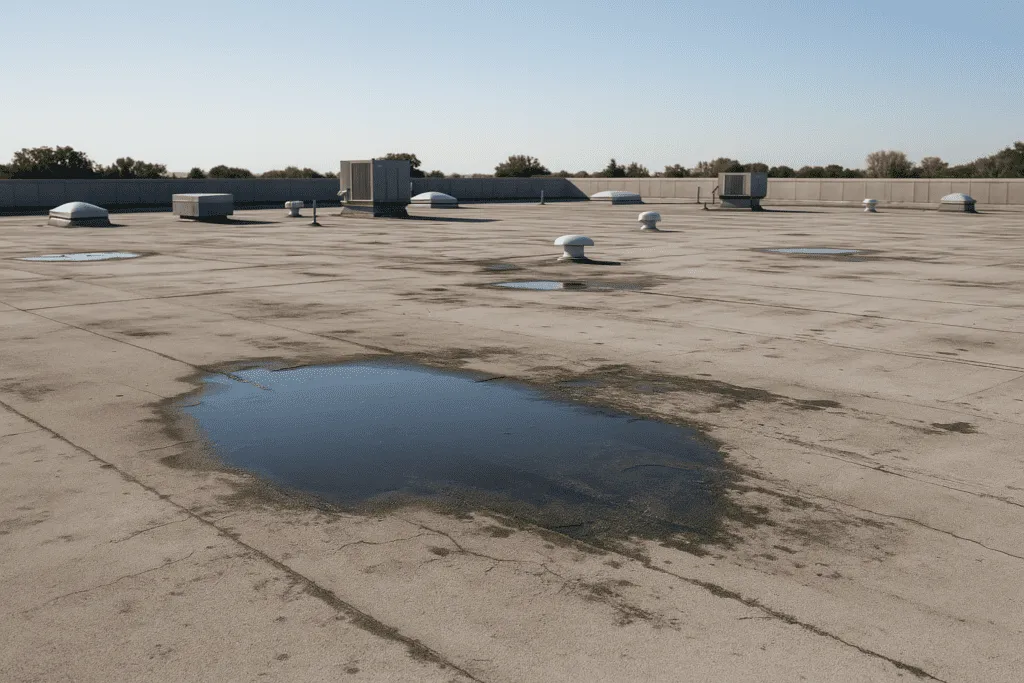
Southern California’s climate poses unique challenges to commercial roofing. The region is known for its intense sun, which can cause roofing materials to dry out and crack over time. Additionally, while the area is generally dry, occasional heavy rains can lead to water pooling on flat roofs, exacerbating potential leaks.
To mitigate these issues, it’s essential to choose roofing materials known for their durability in such climates. For instance, materials like TPO and EPDM are often recommended for their UV resistance and ability to handle temperature fluctuations effectively. You can find more about suitable materials in our article on flat roofing options.
Building Design and Roof Type
The design of your commercial building and the type of roof can also influence the likelihood of leaks. Flat roofs are particularly susceptible because they do not allow water to drain as easily as sloped roofs. Water pooling can lead to leaks if the drainage system is inadequate or blocked.
When designing or renovating a commercial building, consider incorporating features that facilitate water drainage. Regular maintenance is also key to ensuring that drains and gutters remain unclogged. For insights on design considerations, explore our detailed guide on different commercial roofing types.
Impact of Structural Integrity
The structural integrity of a building plays a crucial role in preventing roofing leaks. Issues such as settling foundations or improper construction techniques can create weak points that allow water to penetrate. Regular structural assessments can identify potential problems before they lead to leaks.
Investing in regular inspections and timely repairs is an effective strategy. You might find our article on inspection requirements particularly useful for understanding what to include in these evaluations.
Material and Installation Issues
Quality of Roofing Materials
The choice of roofing materials is a significant factor in preventing leaks. High-quality materials not only last longer but also provide better protection against the elements. However, choosing the right material can be challenging given the variety of options available.
For commercial buildings, options like metal, asphalt, and single-ply membranes each offer distinct advantages. For instance, metal roofs are known for their durability and resistance to extreme weather conditions, making them an excellent choice for many businesses. Check our comparison of metal vs asphalt roofing for more details.
Importance of Proper Installation
Even the best roofing materials can fail if not installed correctly. Poor installation can lead to gaps, improper sealing, and other defects that allow water to penetrate. Ensure that your roofing contractor is experienced and uses professional installation techniques.
Consider hiring certified professionals who specialize in the type of roofing system you have chosen. This not only ensures proper installation but often includes warranties that can save costs in the long run. To understand more about potential costs, review our article on installation costs.
Common Installation Mistakes
Common mistakes during roofing installation include improper layering, insufficient sealing around HVAC units, and inadequate fastening of materials. Each of these can create vulnerabilities that lead to leaks over time.
Working with reputable contractors who adhere to local building codes can mitigate these risks. Learn more about these codes in our article on building codes for commercial roofing.
Maintenance and Repair Practices
Routine Inspections and Maintenance
Regular maintenance is key to identifying and addressing potential problems before they lead to significant leaks. Scheduled inspections can spot issues such as damaged flashing, clogged gutters, and deteriorating sealants.
Develop a maintenance schedule that includes seasonal inspections and after major weather events. This proactive approach can help maintain your roof’s integrity and prevent costly repairs. Our article on roof leak repair provides additional insights into effective maintenance practices.
Identifying and Repairing Leaks
When leaks are identified, it’s crucial to address them promptly. Delayed repairs can lead to more extensive damage, increased repair costs, and potential business disruptions. Effective repair involves accurately identifying the leak source, which may not always be directly above the visible damage.
Professional repair services are recommended to ensure leaks are fixed correctly and efficiently. They can also provide advice on preventing future leaks. For an overview of repair services, visit our page on roof leak repair services.
Cost Considerations for Repairs
The cost of repairing commercial roofing leaks varies depending on the extent of the damage and the materials involved. Minor repairs might cost a few hundred dollars, while extensive damage can run into the thousands.
To manage costs effectively, it’s essential to work with contractors who provide transparent pricing and detailed estimates. For more on cost factors, see our guide on cost factors in commercial roofing projects.
| Repair Type | Average Cost | Timeframe |
|---|---|---|
| Minor Leak Repair | $300 – $600 | 1-2 days |
| Flashing Replacement | $500 – $1,200 | 2-3 days |
| Roof Replacement | $5,000 – $10,000+ | 1-2 weeks |
Frequently Asked Questions
What are the most common causes of roofing leaks in commercial buildings?
The most common causes include weather conditions, poor installation, substandard materials, and lack of maintenance. Addressing these factors proactively can prevent leaks.
How often should commercial roofs be inspected?
It’s recommended to inspect commercial roofs at least twice a year, typically in the spring and fall, and after major weather events to ensure early detection of potential issues.
Can I repair a commercial roof leak myself?
While minor repairs might be manageable, it’s advisable to hire professional services for accurate diagnosis and repair to ensure the problem is fully resolved and avoid further damage.
What should I consider when choosing roofing materials for my commercial building?
Consider durability, climate suitability, cost, and maintenance requirements. Materials like TPO and metal offer excellent durability and weather resistance.
Conclusion
Understanding what factors lead to roofing leaks in commercial buildings is essential for effective property management. By considering environmental impacts, ensuring quality installation, and maintaining regular inspections, you can protect your investment and prevent costly repairs. Whether you are considering new roofing installations or managing existing structures, staying informed and proactive is key to maintaining a leak-free commercial roof.
