
Top Roofing Types That Boost Energy Efficiency for Your Commercial Building Needs
As a commercial property owner, understanding **which roofing types offer better energy efficiency for commercial buildings** can significantly impact your bottom line. Choosing the right roofing material not only reduces energy costs but also enhances sustainability and comfort. In Southern California, where temperatures can soar, investing in an energy-efficient roof is a smart decision. In this article, we explore the best roofing options to help you make an informed choice.

Key Takeaways
- Energy-efficient roofing materials can reduce energy costs by up to 30%.
- Cool roofs, metal roofing, and green roofs are top choices for commercial buildings.
- Tax credits and incentives are available for energy-efficient roofing upgrades.
- Proper installation and maintenance are crucial for maximizing energy efficiency.
- Consider local climate and building needs when selecting roofing materials.
Understanding Energy-Efficient Roofing
What Makes a Roof Energy Efficient?
Energy-efficient roofs are designed to minimize heat absorption and maximize heat reflection, reducing the need for air conditioning. In Southern California’s hot climate, a roof that reflects more sunlight and absorbs less heat can lower cooling costs significantly. The U.S. Department of Energy estimates that cool roofs can reduce energy bills by up to 30%. Factors such as material type, color, and thermal emittance determine a roof’s energy efficiency.
Cool roofs utilize materials like reflective coatings and surfaces that maintain a lower temperature than traditional roofs. This technology not only saves energy but also extends the lifespan of the roof by reducing thermal expansion. For more on energy-efficient materials, see our guide on energy-efficient roofing materials for commercial use.
Benefits of Energy-Efficient Roofing
Installing an energy-efficient roof on your commercial building provides numerous benefits beyond reducing energy bills. It can improve indoor comfort, decrease the urban heat island effect, and reduce greenhouse gas emissions. Furthermore, such roofs often qualify for green building certifications and incentives, including tax credits, as detailed in our article on commercial roofing energy tax credits.
Choosing the right roof type can also influence your building’s insurance premiums, as energy-efficient roofs are less prone to damage from extreme temperature fluctuations. Consult with local commercial roofing contractors to determine the best options for your specific needs.
Top Energy-Efficient Roofing Types
Cool Roofs
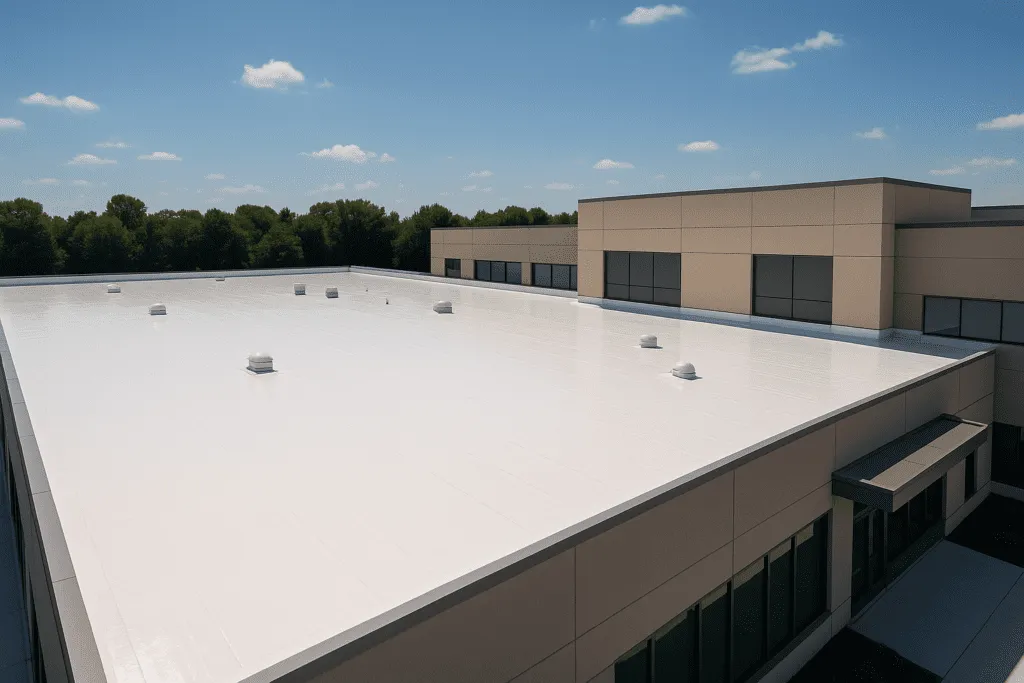
Cool roofs are designed to reflect more sunlight and absorb less heat than standard roofs. They are typically made from highly reflective materials, including light-colored coatings and single-ply membranes like TPO and PVC. Cool roofs can lower roof surface temperatures by up to 50°F, significantly reducing heat transfer into the building.
Cool roofing materials are especially beneficial in sunny climates like California, where they can dramatically cut cooling costs. They also help combat the urban heat island effect, making them an environmentally friendly choice. For additional insights, explore our energy-efficient commercial roofing options.
Metal Roofing
Metal roofing is a durable and energy-efficient option for commercial buildings. Metal roofs reflect solar radiation effectively, reducing cooling loads. They can be installed with reflective coatings to enhance energy efficiency further. Metal roofs are also long-lasting, often exceeding 50 years of service life, as discussed in our comparison of roofing material lifespan for commercial roofs.
Another advantage of metal roofing is its recyclability. At the end of its life, a metal roof can be fully recycled, contributing to sustainability goals. To explore the benefits of metal roofing for your business, visit our article on metal roofing benefits.
Green Roofs
Green roofs, also known as living roofs, are covered with vegetation and soil, providing excellent insulation and energy efficiency. They absorb rainwater, provide natural cooling, and reduce energy consumption by insulating the building. Green roofs also offer aesthetic and ecological benefits, enhancing urban biodiversity.
Although the initial costs of installing a green roof can be high, they offer long-term savings through reduced energy bills and increased roof lifespan. They also contribute to LEED certification points, which can be advantageous for businesses pursuing sustainability credentials.
Factors to Consider When Choosing a Roofing Type
Local Climate
The climate of your location is a critical factor in choosing a roofing type. In Southern California, where summers are hot and dry, selecting a roof that can withstand high temperatures and minimize heat absorption is essential. Cool roofs and metal roofs are particularly effective in such climates, as they reduce cooling costs and improve indoor comfort.
It’s important to consider local regulations and incentives, as some areas offer rebates for installing energy-efficient roofing systems. Consult with local commercial roofing contractors to understand the best options for your building.
Cost and Longevity
While initial installation costs are a major consideration, it’s important to evaluate the long-term benefits of energy-efficient roofing. Metal and green roofs may have higher upfront costs compared to traditional options, but they often pay off through energy savings and reduced maintenance costs over time.
Here is a comparison of costs and longevity for various roofing types:
| Roofing Type | Average Cost/Sq Ft | Expected Lifespan |
|---|---|---|
| Cool Roofs | $7 – $10 | 20 – 30 years |
| Metal Roofing | $8 – $12 | 40 – 70 years |
| Green Roofs | $15 – $25 | 30 – 50 years |
For a deeper understanding of cost differences, read our article on rubber vs. metal commercial roofing costs.
Environmental Impact
Environmental considerations are increasingly important for businesses. Energy-efficient roofs reduce carbon footprints and contribute to sustainability. By choosing materials that are recyclable or sourced sustainably, businesses can further enhance their green credentials.
Additionally, energy-efficient roofs reduce the urban heat island effect, benefiting the local environment. For those aiming to achieve green building certifications, investing in energy-efficient roofing is a crucial step.
- Consult with experts to ensure the chosen roof meets local energy codes.
- Consider the building’s orientation and shading when selecting roofing materials.
- Regularly maintain the roof to ensure it performs optimally.
Frequently Asked Questions
How do cool roofs differ from traditional roofing?
Cool roofs are designed to reflect more sunlight and absorb less heat, making them ideal for hot climates. Traditional roofs, by contrast, often absorb more heat, increasing cooling costs. Cool roofs can significantly lower utility bills and enhance comfort.
Are there financial incentives for installing energy-efficient roofs?
Yes, many states and local governments offer tax credits and incentives for installing energy-efficient roofing systems. These incentives can help offset the initial installation costs. Learn more about maximizing savings with commercial roofing energy tax credits.
What maintenance is required for green roofs?
Green roofs require regular maintenance, including watering, weeding, and checking the integrity of the waterproofing membrane. However, they offer long-term benefits, such as energy savings and increased roof lifespan, which can justify the maintenance efforts.
Can energy-efficient roofs improve indoor air quality?
Yes, energy-efficient roofs can improve indoor air quality by reducing the need for air conditioning, which often recirculates indoor air. Green roofs, in particular, can enhance air quality by filtering pollutants and providing natural cooling.
Conclusion
Investing in **energy-efficient roofing** is a smart choice for commercial buildings, particularly in climates like Southern California. Understanding **which roofing types offer better energy efficiency for commercial buildings** can lead to significant cost savings, improved comfort, and environmental benefits. By considering factors such as local climate, cost, and environmental impact, you can choose the best roofing solution for your business needs. For more detailed information, visit our commercial roofing page and explore our resources on energy-efficient roofing materials and options.
