
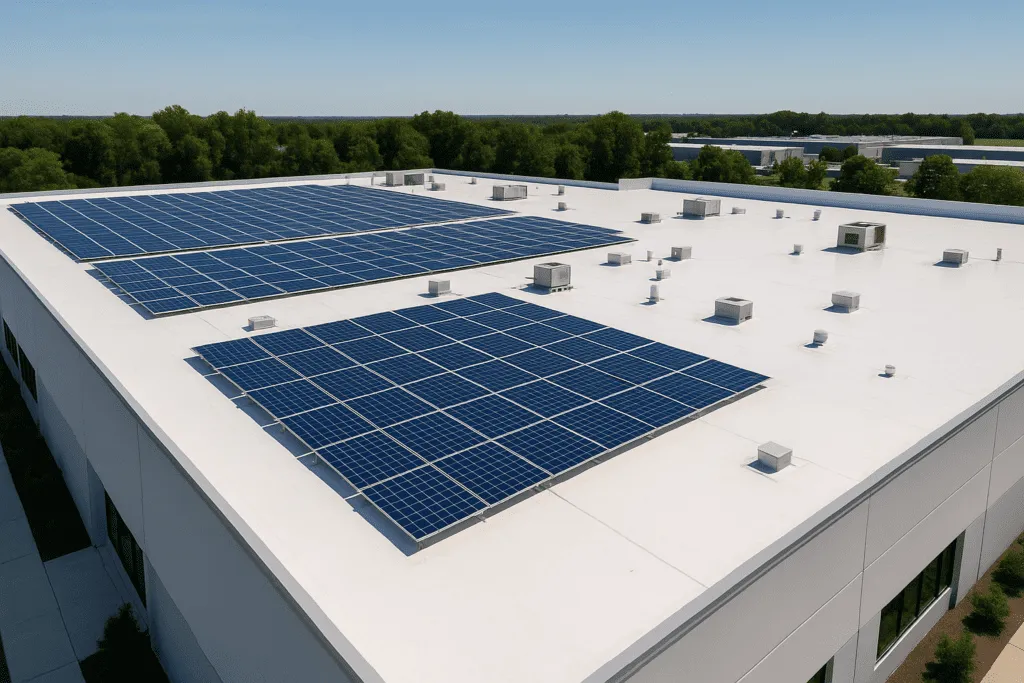
Energy Efficient Roofing Materials for Your Business
In today’s eco-conscious world, choosing the right energy efficient roofing materials for commercial use can significantly impact your business’s energy costs and environmental footprint. With various options available, it’s essential to understand the benefits and considerations of each material. This guide will help you explore the best choices for commercial roofing, ensuring optimal energy efficiency and long-term savings.

Key Takeaways
- Energy efficient roofing materials can significantly reduce energy costs and improve comfort in commercial buildings.
- Reflective roofing options like TPO and EPDM are excellent for Southern California’s sunny climate.
- Green roofing systems not only save energy but also offer stormwater management and aesthetic benefits.
- Metal roofing materials provide durability and energy efficiency, making them a popular choice for businesses.
- Investing in energy efficient materials can enhance the value and sustainability of your commercial property.
Reflective Roofing Solutions
Thermoplastic Polyolefin (TPO)
Thermoplastic Polyolefin (TPO) is a popular choice for energy efficient roofing materials for commercial use, particularly in regions like Southern California where the sun is intense. TPO membranes are known for their high solar reflectivity and heat resistance, which help reduce cooling costs significantly. They are also resistant to UV radiation, chemical exposure, and dirt buildup, making them a durable option.
Installation costs for TPO roofing generally range from $5 to $10 per square foot. This system is especially advantageous for flat or low-slope roofs, common in commercial buildings. TPO’s ability to reflect sunlight can lower surface temperatures by 30-40%, contributing to substantial energy savings over time.
Ethylene Propylene Diene Monomer (EPDM)
Ethylene Propylene Diene Monomer (EPDM) is another excellent reflective roofing material ideal for commercial use. This synthetic rubber roofing membrane is particularly effective in warmer climates due to its reflective properties. EPDM is available in white, which enhances its ability to reflect sunlight and reduce heat absorption.
EPDM roofs can last up to 30 years with minimal maintenance, providing both durability and energy efficiency. The cost of EPDM roofing typically falls between $4 and $8 per square foot. When compared to other commercial roofing materials, EPDM offers a competitive edge in terms of both cost and energy performance.
Advantages of Reflective Roofing
Reflective roofing materials like TPO and EPDM are particularly beneficial in sunny climates. They help in reducing the heat island effect, lower energy consumption, and improve occupant comfort. By installing reflective roofing, businesses can save up to 15% on annual energy costs. Additionally, these materials contribute to earning LEED points, enhancing your building’s environmental credentials.
Green Roofing Systems
Living Roofs
Green roofing systems, also known as living roofs, are becoming increasingly popular for their ability to provide natural insulation and reduce energy consumption. These systems involve a layer of vegetation planted over a waterproof membrane, offering a host of benefits such as stormwater management, improved air quality, and urban biodiversity.
A green roof can decrease your building’s energy usage by up to 50% by providing excellent insulation. While installation costs range from $10 to $25 per square foot, the long-term savings and environmental benefits often outweigh the initial investment. For more detailed insights, consider exploring energy-efficient commercial roofing options.
Benefits of Green Roofing
Green roofs offer a unique blend of ecological and economic advantages. They provide natural insulation, reducing the need for heating and cooling. This leads to significant energy savings, particularly in urban areas where temperatures can be several degrees higher than surrounding regions. Furthermore, green roofs enhance aesthetic appeal and can increase property value.
By managing stormwater runoff, green roofs help prevent sewer overflow and reduce the risk of flooding. They also improve air quality by filtering pollutants and carbon dioxide out of the air. These benefits make green roofing a compelling choice for environmentally conscious businesses.
Considerations for Green Roofing
When considering a green roof, it’s crucial to assess your building’s structural capacity to support the additional weight. The maintenance requirements for green roofs can vary, depending on the depth and type of vegetation used. Regular upkeep is necessary to ensure plant health and system functionality. Engage with professionals to determine the best green roofing solution for your commercial property.
Metal Roofing Options
Standing Seam Metal Roofs
Metal roofing is renowned for its durability and energy efficiency, making it an excellent option for commercial use. Standing seam metal roofs are particularly popular due to their sleek appearance and superior weather resistance. The interlocking seams provide exceptional protection against leaks and wind uplift.
Metal roofs have a lifespan of up to 50 years or more, and their reflective surfaces can reduce cooling costs by 10-15%. The installation cost for standing seam metal roofs ranges from $7 to $12 per square foot. For a detailed comparison of metal roofing materials, read about the best metal roofing materials for businesses.
Benefits of Metal Roofing
Metal roofs offer numerous advantages, including low maintenance, fire resistance, and energy efficiency. Their ability to reflect solar radiation helps in maintaining a cooler building temperature, reducing the need for air conditioning. Additionally, metal roofs are recyclable, contributing to sustainability efforts.
For businesses seeking a robust and eco-friendly roofing solution, metal roofs provide a cost-effective option that balances upfront costs with long-term savings. The benefits of metal roofing make it a wise investment for commercial properties.
Considerations for Metal Roofing
While metal roofs are highly durable, they can be noisy during rainstorms unless proper insulation is installed. It’s essential to consider the acoustic impact when selecting this material. Additionally, the initial costs can be higher than some other roofing options, but the longevity and energy savings often justify the investment.
Comparison of Energy Efficient Roofing Materials
| Material | Average Cost per Sq Ft | Expected Lifespan (Years) |
|---|---|---|
| TPO | $5 – $10 | 20-30 |
| EPDM | $4 – $8 | 25-30 |
| Green Roof | $10 – $25 | 30-50 |
| Standing Seam Metal | $7 – $12 | 40-50 |
Frequently Asked Questions
What is the most energy efficient roofing material for commercial use?
While several materials offer energy efficiency, TPO and EPDM are among the top choices for their high reflectivity and durability. Green roofs also provide excellent energy savings through natural insulation.
How do energy efficient roofing materials help reduce costs?
Energy efficient materials reduce the need for heating and cooling by reflecting sunlight and providing insulation. This leads to lower energy bills and enhances indoor comfort, which is particularly beneficial in regions like Southern California.
Are there any incentives for installing energy efficient roofing?
Many states offer incentives and rebates for installing energy efficient roofing systems. These can include tax credits, rebates, and even subsidies, which help offset the initial installation costs. Check local programs for specific opportunities in your area.
How long do energy efficient roofing materials typically last?
The lifespan of energy efficient materials can vary: TPO and EPDM generally last 20-30 years, while metal roofs can last 40-50 years. Green roofs have a lifespan of 30-50 years, depending on maintenance and environmental conditions.
Conclusion
Choosing the right energy efficient roofing materials for commercial use can have a profound impact on your business’s operational costs and environmental impact. Whether you opt for reflective materials like TPO and EPDM, go green with a living roof, or invest in durable metal roofing, each option offers unique benefits. By considering factors such as climate, budget, and long-term goals, you can make an informed decision that enhances the sustainability and value of your commercial property. For further guidance, explore commercial roofing solutions tailored to your needs.
