
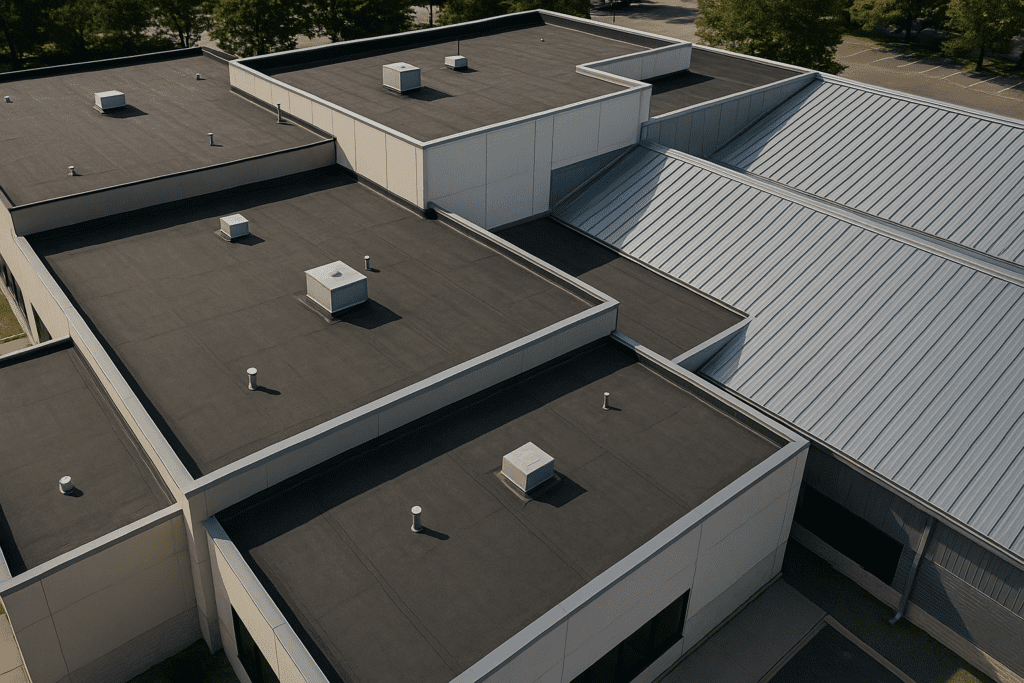
Commercial Roofing Materials: Which One Is Best?
Choosing the right roofing materials for your commercial property is a significant decision that affects not only the aesthetic appeal but also the longevity and energy efficiency of the building. With a variety of options available, conducting a thorough Commercial Roofing Materials Comparison is crucial to make an informed decision. This article delves into different roofing materials, highlighting their pros and cons, costs, and suitability for various climates, including Southern California’s unique weather conditions.

Key Takeaways
- Different commercial roofing materials offer varied advantages, such as durability, energy efficiency, and cost-effectiveness.
- Understanding the pros and cons of each material can help you select the best option for your specific needs and budget.
- The climate in Southern California influences the performance and longevity of roofing materials.
- Consulting with a professional can provide invaluable insights and help avoid costly mistakes.
- A comprehensive commercial roofing guide is essential for businesses looking to make informed decisions.
Types of Commercial Roofing Materials
Built-Up Roofing (BUR)
Built-Up Roofing (BUR) is one of the oldest and most reliable roofing systems used in commercial buildings. It consists of multiple layers of bitumen and reinforcing fabrics, forming a durable, protective barrier. The top layer is often covered with gravel or mineral granules to enhance its durability and UV protection.
BUR systems are well-suited for flat or low-slope roofs, providing excellent waterproofing and protection against harsh weather. In Southern California, where the sun can be intense, the UV resistance of BUR systems helps in maintaining the roof’s integrity over time.
However, installing Built-Up Roofing can be labor-intensive and may require more time compared to other systems. The cost for BUR generally ranges from $5 to $9 per square foot, depending on the materials and labor involved.

Modified Bitumen Roofing
Modified Bitumen Roofing is an evolution of the traditional BUR system, offering enhanced flexibility and ease of installation. It is composed of asphalt combined with polymerized rubber or plastic, which improves its durability and resistance to temperature extremes.
This material is particularly beneficial in environments like Southern California, where temperature fluctuations are common. Its flexibility reduces the risk of cracking and other weather-related damage. Additionally, modified bitumen can be applied using a variety of methods, including hot-mopping, cold-applied adhesives, or self-adhering sheets.
The cost of Modified Bitumen Roofing is slightly lower than BUR, typically ranging from $4 to $8 per square foot. For businesses seeking a balance between cost and performance, modified bitumen is a strong contender.
Single-Ply Membrane
Single-Ply Membrane systems are favored for their lightweight properties and ease of installation. These membranes come in two main types: Thermoplastic Polyolefin (TPO) and Ethylene Propylene Diene Monomer (EPDM). Both options offer excellent resistance to UV rays, chemical exposure, and punctures, making them ideal for various commercial applications.
TPO membranes are known for their reflective qualities, which can significantly reduce cooling costs by reflecting sunlight. On the other hand, EPDM is renowned for its durability and ability to withstand extreme weather conditions. The choice between TPO and EPDM often comes down to specific building requirements and budget considerations.
The cost of Single-Ply Membrane systems typically falls between $3.50 and $7.50 per square foot. For businesses focused on energy efficiency, particularly in sunny climates, TPO is highly recommended. For more on energy-saving options, explore our best energy-saving roofing materials guide.
Comparing Metal Roofing Options
Standing Seam Metal Roofing
Standing Seam Metal Roofing is a popular choice for commercial properties due to its longevity and sleek appearance. This system features vertically running panels with raised seams that interlock to prevent water penetration. Its durability and low maintenance requirements make it an attractive option for many businesses.
In Southern California, where occasional heavy rains can occur, the watertight seal of standing seam metal roofs provides excellent protection. Additionally, metal roofs are highly resistant to fire, pests, and rot, contributing to their long lifespan.
The cost of Standing Seam Metal Roofing ranges from $10 to $16 per square foot, which is higher than other materials but justified by its longevity and low maintenance. For more metal roofing insights, check our article on best metal roofing materials for businesses.
Corrugated Metal Roofing
Corrugated Metal Roofing is another option in the realm of metal roofing, known for its strength and cost-effectiveness. Its wavy design provides additional structural support, making it suitable for large commercial roofs.
This type of roofing is less expensive than standing seam options, averaging between $5 and $8 per square foot. While it may not offer the same aesthetic appeal, its affordability and durability make it a viable choice for many businesses.
However, it’s important to note that corrugated metal can be more susceptible to rust if not properly maintained or coated with protective layers. Regular inspections and maintenance can help extend its lifespan.
Metal Shingles
Metal Shingles combine the aesthetic appeal of traditional shingles with the durability of metal. These are available in various designs, mimicking the look of wood, slate, or asphalt shingles while offering superior fire resistance and longevity.
For businesses seeking a unique aesthetic without compromising on durability, metal shingles offer a compelling option. They are particularly advantageous in regions like Southern California, where fire safety is a top concern.
The installation cost for metal shingles is comparable to standing seam roofing, ranging from $9 to $14 per square foot. To explore the benefits of metal roofing further, visit our benefits of metal roofing guide.

Flat Roofing Solutions
EPDM Rubber Roofing
EPDM (Ethylene Propylene Diene Monomer) Rubber Roofing is a highly durable synthetic rubber membrane widely used for low-slope buildings. Its excellent resistance to UV rays and ozone makes it an ideal choice for flat roofs in sunny climates like California.
EPDM is available in black or white, with the white variant offering additional energy-saving benefits by reflecting sunlight. This can help reduce cooling costs significantly during the hot Californian summers.
The cost of EPDM roofing ranges from $4 to $8 per square foot, making it a cost-effective choice for many commercial properties. For a deeper dive into flat roofing options, consider our detailed article on flat roofing solutions.
Thermoplastic Polyolefin (TPO) Roofing
TPO Roofing is gaining popularity due to its energy efficiency and ease of installation. This single-ply membrane is highly reflective, making it an excellent choice for reducing energy costs in commercial buildings.
In addition to its energy-saving properties, TPO offers resistance to UV radiation, chemical exposure, and punctures. Its flexibility and light weight make it easy to install, reducing labor costs and installation time.
The cost of TPO roofing generally falls between $3.50 and $7.50 per square foot. For businesses looking to maximize energy efficiency, TPO is a standout option. Learn more about affordable commercial roofing solutions in our guide to cost-effective options.
Polyvinyl Chloride (PVC) Roofing
PVC Roofing is another versatile single-ply membrane option that offers excellent durability and resistance to chemical damage. Its inherent flexibility makes it particularly useful for roofs with complex designs or structures.
PVC roofs are available in various colors, allowing businesses to choose a design that complements their building’s aesthetic. The reflective properties of PVC also contribute to reduced energy consumption, much like TPO.
However, the cost of PVC roofing is slightly higher, ranging from $6 to $10 per square foot. Despite the higher cost, its durability and energy efficiency make it a worthy investment for certain commercial applications.
Frequently Asked Questions
What is the best commercial roofing material for energy efficiency?
TPO and PVC roofing are often considered the best options for energy efficiency due to their high reflectivity, which helps reduce cooling costs in sunny climates like Southern California.
How do I choose the right roofing material for my commercial building?
Consider factors such as climate, budget, building structure, and aesthetic preferences. Consulting with a professional can also provide personalized recommendations based on your specific needs.
Are metal roofs a good choice for commercial properties?
Yes, metal roofs are an excellent choice for commercial properties due to their durability, low maintenance, and fire resistance. They can be more expensive initially but offer long-term savings.
What are the maintenance requirements for different roofing materials?
Maintenance varies by material. Generally, metal roofs require minimal upkeep, while BUR and Modified Bitumen may need more frequent inspections to ensure longevity.
Conclusion
Choosing the right commercial roofing material involves a careful balance of cost, durability, energy efficiency, and aesthetic appeal. By conducting a thorough Commercial Roofing Materials Comparison, you can make an informed decision that aligns with your business goals and regional climate conditions. Consulting with an experienced professional is invaluable, helping you navigate the complexities of materials and installation. For more comprehensive insights, explore our dedicated commercial roofing guide to ensure your business is covered with the best possible solution.


