
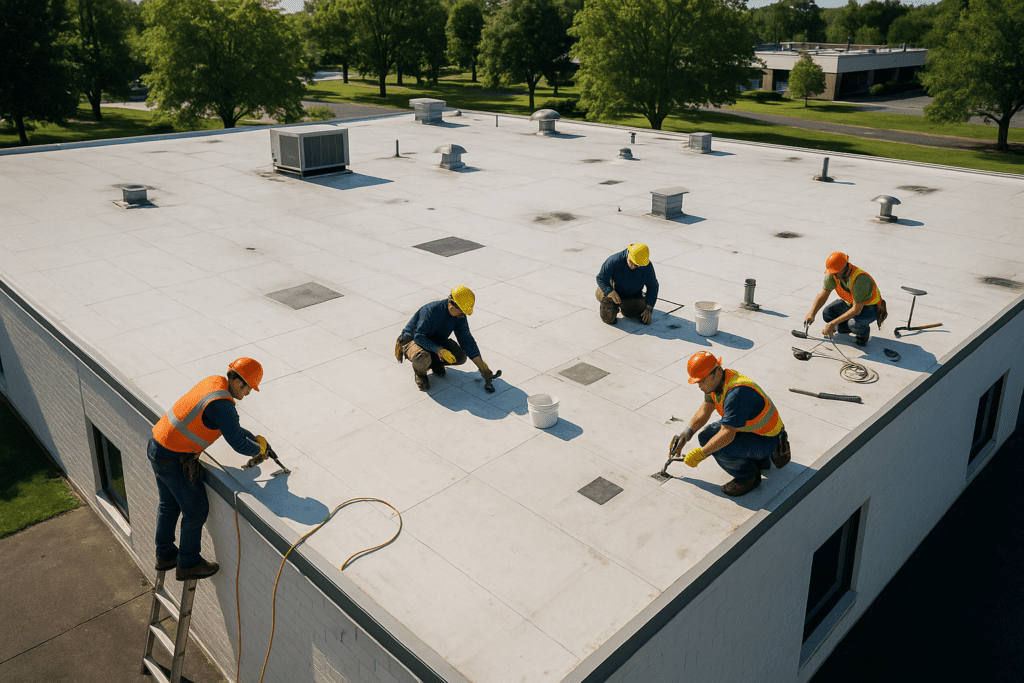
How to Budget for Commercial Roofing Repair Costs
Effectively managing your building’s maintenance involves understanding the intricacies of budgeting for commercial roofing repair. With various factors influencing repair costs, from material choices to labor rates, creating an accurate budget can be challenging. This guide will help you navigate through the complexities and equip you with the knowledge needed to plan your commercial roofing expenses efficiently.

Key Takeaways
- Understanding the key factors that influence commercial roofing repair costs is crucial for accurate budgeting.
- The type of roofing material and the extent of repairs significantly affect overall expenses.
- Regular maintenance can prevent costly repairs and extend the lifespan of your roof.
- Comparing quotes from different service providers ensures competitive pricing and quality service.
- Engaging with local roofing experts can offer valuable insights specific to your region.
Factors Influencing Commercial Roofing Repair Costs
Material Selection and Its Impact
Choosing the right material for your commercial roof is a critical decision that will affect both the initial costs and long-term maintenance expenses. Common materials such as TPO, EPDM, and metal each have their unique advantages and cost implications. For instance, TPO is known for its energy efficiency but can be more expensive to install initially. Conversely, EPDM offers a more budget-friendly upfront cost but may require more frequent maintenance in the long run.
In Southern California, where the climate can be quite variable, selecting materials that withstand high UV exposure and occasional heavy rains is essential. Metal roofing, for example, provides excellent durability and is ideal for the region’s climate, although it may come with a higher price tag.
To make an informed decision, consider the following comparison of popular roofing materials:
| Material | Average Cost per Square Foot | Estimated Lifespan |
|---|---|---|
| TPO | $5 – $8 | 15 – 20 years |
| EPDM | $4 – $7 | 12 – 15 years |
| Metal | $7 – $12 | 40 – 70 years |

Scope and Extent of Repairs
The extent of the repairs needed on your commercial roof will have a substantial impact on your budget. Minor repairs such as patching small leaks or replacing a few shingles are generally less costly than major structural repairs. However, ignoring minor issues can lead to more significant damage over time, resulting in higher repair costs.
It’s crucial to identify the problem areas early and address them promptly. Regular inspections can help catch potential issues before they escalate. For detailed advice on managing leaks, refer to our guide on roof leak repair.
Here are practical tips to manage the scope of repairs effectively:
- Schedule annual roof inspections to detect potential problems early.
- Keep a record of past repairs and maintenance to identify recurring issues.
- Consult with a professional roofer to assess the overall condition of your roof.
Labor Costs and Contractor Selection
Labor costs can vary significantly based on location, the complexity of the repair, and the contractor’s expertise. In the San Gabriel Valley, you can expect labor rates to range from $50 to $100 per hour. Hiring experienced contractors can ensure quality work, but it may come with a premium cost.
When selecting a contractor, consider both the cost and the value they provide. Cheaper options might save you money upfront but could lead to additional expenses if the repairs are not conducted properly. It’s essential to obtain multiple quotes and compare them not just on price but also on the scope of work and warranties offered.
For insights into obtaining accurate cost estimates, refer to our article on commercial roofing cost estimates.

How to Plan and Budget for Repairs
Establishing a Maintenance Fund
Creating a dedicated maintenance fund for your commercial roofing needs is a proactive way to manage repair costs. By setting aside a fixed percentage of your annual budget, you can ensure that funds are available for both routine maintenance and unexpected repairs.
As a rule of thumb, allocate about 1-2% of your property’s value annually for maintenance expenses. This approach not only helps cover routine upkeep but also cushions against the financial impact of unforeseen issues.
Consistent budgeting allows you to address repairs promptly, minimizing the risk of extensive damage and costly emergencies.
Regular Maintenance and Inspections
Regular maintenance is key to extending the life of your commercial roof and avoiding expensive repairs. Schedule bi-annual inspections to assess the condition of the roof, clean gutters, and address minor issues before they develop into major problems.
In a region like Southern California, where weather conditions can be unpredictable, ensuring that your roof can withstand extreme temperatures and occasional storms is essential. Routine maintenance tasks might include resealing seams, replacing damaged flashings, and cleaning debris from the roof surface.
For more detailed maintenance strategies, explore our article on cost factors for commercial roofing.
Choosing the Right Contractor
Selecting the right contractor is critical to ensuring quality repairs that fit your budget. Consider contractors who are licensed, insured, and have a solid reputation in the industry. Reading reviews and asking for referrals can provide insights into a contractor’s reliability and workmanship.
Ensure that the contractor provides a detailed estimate outlining the scope of work, materials to be used, labor costs, and timelines. This transparency helps prevent unexpected costs and ensures that both parties have a clear understanding of the project scope.
For cost-effective solutions, consider reading about cheap commercial roofing solutions that don’t compromise on quality.
Frequently Asked Questions
What are the most common types of commercial roofing materials?
Common types include TPO, EPDM, metal, and modified bitumen. Each material offers different benefits, such as durability, energy efficiency, and cost-effectiveness. For more information, check out our guide on commercial roofing types.
How often should I schedule roof inspections?
It is recommended to schedule roof inspections at least twice a year, ideally in the spring and fall. Regular inspections help identify and resolve issues before they become significant problems.
Can I handle minor roofing repairs myself?
While some minor repairs can be managed independently, it’s generally advisable to hire a professional to ensure the job is done safely and correctly. This is particularly important for commercial buildings where the stakes are much higher.
What factors should I consider when selecting a roofing contractor?
Key considerations include the contractor’s experience, reputation, licensing, and insurance. It’s also important to review their past work and obtain multiple quotes to compare services and pricing.
Conclusion
Budgeting for commercial roofing repair requires a comprehensive understanding of the factors influencing costs and proactive planning. By selecting the right materials, maintaining regular inspections, and choosing experienced contractors, you can effectively manage your repair expenses. Understanding these elements not only helps you prepare financially but also ensures the longevity and reliability of your commercial roof. For further assistance, explore our resources on commercial roofing services available at Roof Titan.


